LLB tackles low exam pass rates in grade seven

Thembelihle Mhlanga
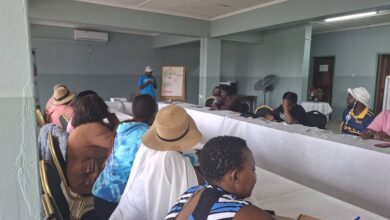
In a bid to address the low exam pass rates among grade seven learners, Lupane Local Board Chairperson and Ward one Councilor, Thandolwenkosi Nyoni, recently held a meeting with teachers and parents. The meeting aimed to chart a way forward and identify the key challenges contributing to the poor academic performance.
Speaking at the meeting, Nyoni expressed deep concern over the declining pass rates and emphasized the need for a collaborative effort between the local authorities, teachers, and parents. “The low pass rates in grade seven are a serious concern for us as the local leadership. We cannot afford to have our children struggling academically, as this will have a detrimental impact on their future prospects. It is imperative that we work together to find lasting solutions to this problem.”
One of the key issues raised during the meeting was the lack of teaching resources in the schools. Parent Thembi Moyo lamented the situation, stating, “Our children are being severely disadvantaged by the lack of essential learning materials such as textbooks, stationery, and laboratory equipment. How do we expect them to perform well when they don’t have the necessary tools to learn effectively?”
Another parent, Sipho Ndlovu, echoed similar sentiments, emphasizing the need for improved infrastructure. “The classrooms are overcrowded, and the learning environment is not conducive for our children to thrive. We need to invest in upgrading the schools and providing a better learning atmosphere.”
However, the non-willingness of some parents to pay fees for an improved learning environment was also highlighted as a concern. Nyoni acknowledged this challenge, saying, “We understand the financial constraints that some families face, but the payment of school fees is crucial for us to be able to address the infrastructure and resource gaps. We urge all parents to fulfill their financial obligations to ensure their children receive the quality education they deserve.”
Parent Nkosiyazi Ncube expressed her understanding of the financial burden but emphasized the need for a collective approach. “As parents, we want the best for our children, but sometimes our own financial situations make it difficult to contribute as much as we would like. However, we must all come together and do what we can to support the schools and improve the learning outcomes for our children.”
In response to the issues raised, Nyoni assured the attendees that the local board would work closely with the Ministry of Primary and Secondary Education to secure additional funding and resources for the schools. “We will engage with the relevant authorities and explore various avenues to address the lack of teaching resources and infrastructure challenges. It is our collective responsibility to ensure that our children receive the education they need to succeed.”
One teacher, who preferred to remain anonymous, shared her frustrations with the current state of affairs. “It’s heartbreaking to see our students struggle, knowing that they have the potential to excel. We do our best with the limited resources we have, but it’s an uphill battle. I hope that through this collaborative effort, we can find a way to provide our learners with the support they need to thrive.”
Parent Nomsa Dube expressed her appreciation for the meeting and the local board’s efforts. “I’m glad that Councilor Nyoni has taken the initiative to address this issue. As parents, we want to be involved and contribute to the solutions. We’re willing to work with the teachers and the local authorities to ensure that our children receive the education they deserve.”
The meeting concluded with a renewed commitment from the local authorities, teachers, and parents to work collaboratively to find lasting solutions to the challenges faced by grade seven learners in Lupane. Nyoni emphasized the importance of continuous engagement and follow-up to ensure that the initiatives discussed translate into tangible improvements in the education system.