Africa’s new battle for truth in the age of AI
By Nkosikhona Dibiti
A new Paradigm Initiative report has found that education and digital confidence offer little protection against online deception, as six in ten internet users across Africa have been deceived into believing that AI-generated images, videos, or voice clips were real.
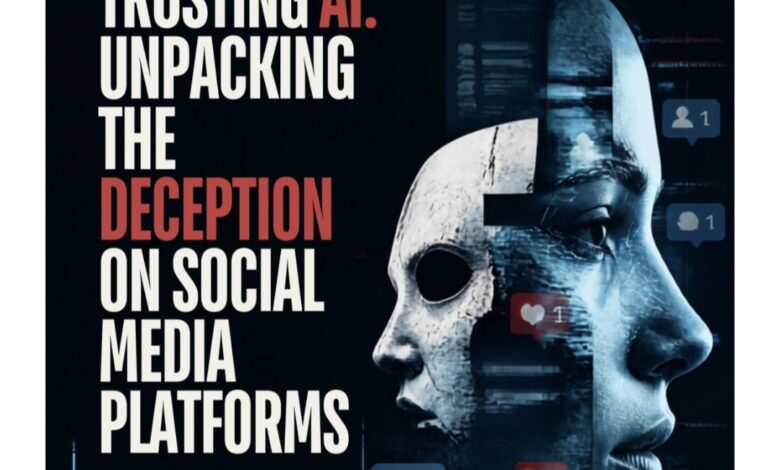
The findings, released in September 2026 by Paradigm Initiative in its report, Trusting AI: Unpacking the Deception on Social Media Platforms, are based on a survey of 211 people across 20 African countries.
Respondents who described themselves as highly confident in spotting AI-generated fakes were deceived at virtually the same rate as those who said they lacked confidence.
Even among people who reported actively verifying content before believing it, 58% said they had still been fooled.
The report concludes that individual vigilance is not a reliable defence against AI-generated deception online.
“The biggest risk? We will no longer know who to trust,” one respondent said.
The problem cuts across all age groups. 63% of 25- to 35-year-olds, the most digitally active group in the sample said they had believed AI-generated content was real before later realising it was fake. The figure rose to 67% among respondents aged over 55, while 57% of those aged 18 to 24 reported the same experience.
Eighty-three percent of respondents said they encounter AI-generated content frequently or very frequently online, while 75% said it regularly creates confusion about which information to trust.
Images and videos are the dominant forms of deception.
Eighty-four percent of respondents said they most commonly encounter AI-generated photos and images, followed by videos at 67% and AI-written text articles at 55%.
Social media platforms were identified as the main distribution channel, cited by 67% of respondents. This was well ahead of search engines, cited by 16%, and messaging applications such as WhatsApp, cited by 10%.
“AI-generated content is being weaponised to manufacture legitimacy for authoritarian narratives, at a scale and speed that outpaces the verification capacity of newsrooms,” one media professional told researchers.
“If trained newsrooms cannot keep pace, individual users relying on intuition certainly cannot.”
Public concern is near-universal. Eighty-eight percent of respondents said they were concerned or very concerned about the societal impact of AI-generated content, a figure that remained consistent across age groups and countries.Trust in the platforms responsible for managing such content has also collapsed.
Only 16% of respondents believe social media companies are doing enough to address AI-generated misinformation, while 60% said they are not.
Agreement was lowest on whether technology companies are transparent about AI-generated content on their platforms.
Respondents were clear about the action they want taken. Sixty-seven percent said social media platforms should be legally required to label AI-generated content, while 72% supported requiring platforms to remove AI-generated material that causes harm.
The results point towards mandatory regulation rather than voluntary commitments.
When asked who should be responsible, respondents spread accountability almost equally among governments, cited by 51%; social media companies, also cited by 51%; and AI technology developers, cited by 49%. Nearly 40% explicitly favoured a shared-responsibility model.
The report also raises concerns about inequality. Its respondents are among Africa’s most connected citizens: most hold university degrees and go online multiple times a day. If this group is struggling to identify AI-generated deception, the authors warn that populations with lower connectivity, less formal education and fewer digital verification tools may face an even greater risk.
“Low media literacy among the rural population of between 35 to 60 years old who have access to the internet; this age group is problematic when it comes to falling for AI-generated content,” one respondent noted.
Respondents identified false health information, election manipulation, financial scams, and deepfakes targeting women and children as the harms they fear most.
False health information drew particular concern, with one respondent warning: “During disease outbreaks, false information about cures or vaccines can lead to preventable illness and death.”
The report calls for mandatory content labelling, enforceable removal of harmful AI-generated material, and binding regulatory frameworks involving governments, platforms and AI developers.
It was authored by Sani Suleiman and reviewed by Thobekile Matimbe.
The full report is available at https://paradigmhq.org/report/trusting-ai-unpacking-the-deception-on-social-media-platforms/
Community Podium is the recipient of the 2025 Outstanding NGO Reporting Award. This reflects our dedication to amplifying community voices and advancing public-interest journalism.