Fears of politicisation of food aid ahead of election
Calvin Manika
This year marks Zimbabwe’s second election since the late Robert Mugabe was deposed from power. Elections will take place as Zimbabwe experiences high inflation, which is escalating food costs. Despite the fact that the country has seen some good rains, some regions of Matabeleland still lack access to food.
Experts and the opposition claim that the ruling party will once again attempt to buy votes using food handouts as in previous election campaigns.
President Emmerson Mnangagwa promised that Zimbabwe will start over after Mugabe was overthrown in November 2017, putting an end to among other things electoral malpractices like the politicization of food aid.
The Zimbabwe Peace Project (ZPP), an NGO that keeps an eye on Zimbabwe’s democratic environment, has received complaints of people being denied food aid on account of their political membership from all over the nation. These charges have been echoed by the opposition political parties.
Zimbabwe’s Human Rights Commission stated in 2016 that officials of the ruling Zanu-PF party “were the major perpetrators in violations linked to the distribution of food, agricultural inputs, and other forms of aid,” and that such practices violated UN Principles on Fundamental Human Rights to Food.
District Development Coordinators (DDC), formerly known as District Administrators (DA), who are selected by the government, coordinate the distribution of food in Zimbabwe.
According to historian Tapiwa Madimu, the ZANU PF leadership consistently exploits the ongoing (food) crises to consolidate its political authority and steer the socio-political narrative in the nation.
“They have mastered the skill of marrying party politics with government support. In the past, the government has provided assistance to those living in food-shortage areas, but it has done so while dressed in party regalia confounding the public,” said Madimu.
Food security is the ability to feed oneself from one season to the next, according to the World Food Programme (WFP). This ability is commonly evaluated in terms of agricultural seasons, although it can also refer more broadly to times between incomes. The total amount of the main staple—maize grain in Zimbabwe’s case—in the nation over a given period in relation to demand is the basis for evaluating food security at the national level.
According to multiple witnesses who spoke to Community Podium, authorities from the ruling party only distributed rice given by China to party members during the 2018 elections and COVID 19-induced lockdowns.
Some people in Matabeleland said they were not aware that food aid was accessible in their neighborhoods.
“We were taken aback that some of us were still there. During the election campaign this year, we anticipate the ruling party to take the same tack. We will probably be excluded,” said Thabiso Ncube.
According to WFP, throughout the nation, widespread poverty, HIV/AIDS, limited employment opportunities, liquidity challenges, recurrent climate-induced shocks, and economic instability all contribute to limiting adequate access to food.
Madimu claimed that Zimbabwe’s international aid system operates rather “tightly” when compared to relief initiatives in other regions of the world.
“Several conversations that we had during Human Rights Watch’s research in Zimbabwe revealed that aid workers and program managers generally believed that, compared to other relief situations, less international relief food was being diverted or distributed unfairly in Zimbabwe and more was reaching the targeted population despite the politicisation of the same,” said Madimu.
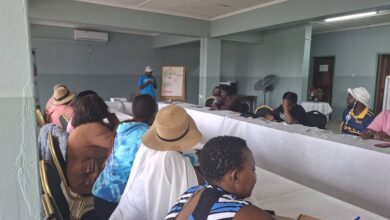
According to the World Food Programme in Zimbabwe, beneficiaries are chosen by relief committees based on predetermined criteria, and the partner Non-Governmental Organisations (NGOs) of the WFP verify the lists of recipients at open meetings with the local community where the selection criteria are reviewed. Additionally, recipients are informed of their “entitlement”, which is the kind and quantity of food they will receive, the process used to choose recipients, the total number of recipients, as well as the timing and location of food distribution, as well as how many individuals will receive assistance.
The NGOs make it clear during these sessions that providing food aid is a non-political endeavor and that no one should show up to a distribution site wearing “party regalia” to render the distribution procedure into a political event. At the locations, no “sloganeering” or campaigning is allowed. After that, locals are chosen to carry out the distribution under the guidance of WFP and NGO workers.
The politicization of food, however, still exists. Mbuso Siwela, a councilor for ZANU PF in Bubi ward 4, attracted attention last year for allegedly preventing several members of the opposition Citizens Coalition for Change (CCC) from receiving food hand-outs despite their names appearing on the list of eligible recipients.
When the Department of Social Welfare distributed drought aid to communities in the Majiji region on September 9 2022, Siwela reportedly interfered with a food distribution operation in Bubi.
According to a villager who wished to remain anonymous, when the social welfare workers showed up at Majiji Primary School, Siwela hurried over to them and informed them that his ward had individuals who supported the CCC and that such individuals should not receive food from his administration.
Reports showed that Siwela explained to the gathering ZANU PF’s stance on food distribution. According to the so-called guideline, only ZANU PF members with valid membership cards were allowed to “eat.”
Siwela, according to the displeased villagers, asserted that a decision to withhold food to opposition supporters was taken at a ZANU-PF provincial meeting, when the councillors were instructed to collaborate with kraal heads, headmen, and chiefs to use food distribution in election campaigns for 2023.
When contacted for comment, Siwela refuted the accusations, claiming that only individuals who had already received food aid from another source were requested to make room for those who had not.
“Some people received food assistance from benefactors that neither the council nor I, as their councillor, knew,” said Siwela.