MPs Clash Over BEAM Payments as Education Funding Gap Leaves Poor Children Behind

Parliamentary Watch
HARARE — A heated debate erupted on the floor of the National Assembly on Tuesday, 10 November 2026 over whether the Government’s Basic Education Assistance Module (BEAM), a programme designed to keep children from poor families in school was actually reaching its intended beneficiaries, with opposition MPs citing figures showing only a fraction of the allocated funds had been disbursed.
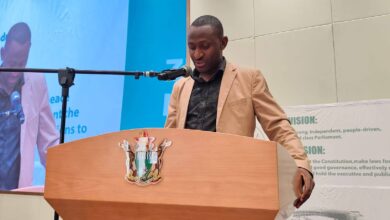
Hon. Mushoriwa (Dzivarasekwa) confronted the House with figures he attributed to the Minister of Finance himself, telling Parliament that up to 30 June 2026, only 8% of the Ministry of Public Service, Labour and Social Welfare’s budget had been released.
“Now, if you do your own calculation, if the Minister of Finance is saying, I paid only 8% to the Ministry of Public Service, Labour and Social Welfare, how does someone then claim that BEAM is actually being paid, when we come from constituencies where BEAM has not been paid for more than three years?”
Mushoriwa demanded. “Inasmuch as we want to be fair to each other, I think it is important to be factual. Right now, Zimbabweans are listening and they know what is happening on the ground.”
BEAM was established to pay tuition fees for learners from households unable to afford school fees. Without the grant, children from poor families risk dropping out of school, an acute risk in Matabeleland, where poverty rates are among the highest in the country and many households have no regular income.
The Ministry of Public Service, Labour and Social Welfare which administers BEAM alongside disability grants and other social welfare transfers was described by Mushoriwa as “poorly funded,” with the gap between its allocation and actual releases undermining the Government’s stated commitment to inclusive development.
The statement triggered an immediate rebuke from the Government side. Hon. Malinganiso, Chairperson of the Portfolio Committee responsible for the Ministry, acknowledged the shortfall but argued that the picture was not entirely bleak.
“The fact that BEAM is not fully paid does not necessarily mean there are no payments for BEAM. The fact is, this year a greater chunk of the BEAM funds has been paid, which was not enough,” Malinganiso said.
The Temporary Speaker (Hon. J. Tshuma) attempted to draw a middle line, ruling that all sides were in agreement “that BEAM has not been fully paid but at the same time, payments are being made.”
The exchange laid bare a persistent tension at the heart of Zimbabwe’s education funding: successive government budgets have allocated money to BEAM, but the Ministry of Finance has consistently released funds well below the budgeted amounts, leaving schools many of them rural schools in Matabeleland and other outlying regions owed arrears that sometimes span multiple school terms.
For many families in Matabeleland, BEAM is the single mechanism standing between their children and permanent exclusion from schooling. Schools that do not receive BEAM reimbursements have been known to turn away fee-defaulting learners or demand payment directly from parents who have none to give.
Community Podium is the recipient of the 2025 Outstanding NGO Reporting Award. This reflects our dedication to amplifying community voices and advancing public-interest journalism.