Women’s access to land in Zimbabwe remains insecure, study reveals
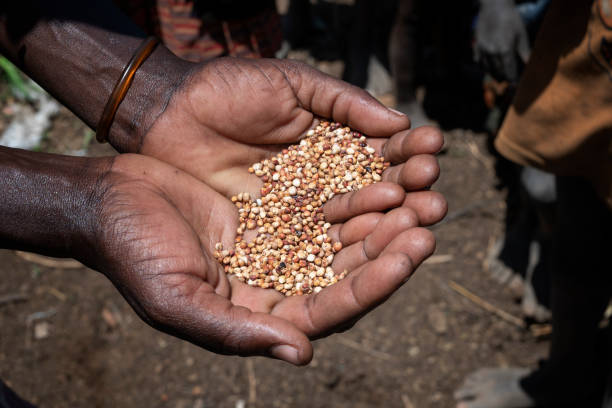
Image Source: Istock Photos
By Nobukhosi Ndlovu
A recent study by the Food Justice Network has provided findings that women’s access to land in Zimbabwe remains insecure, despite constitutional guarantees of equality.
Communal lands, which support approximately 61 percent of the population, are governed under the Communal Land Act [Chapter 20:04], which vests land ownership in the President and delegates allocation authority to traditional leaders (ZIMSTAT, 2024). While this framework oversees access, it does not guarantee secure or documented tenure.
The study, “A Feminist Policy Analysis on Land, Seed and Climate Governance in Zimbabwe,” highlighted that women’s land rights are usually accessed through marriage or kinship, rendering widows and divorced women particularly vulnerable to dispossession. Testimonies from the analysis repeatedly highlighted the weakness of verbal land allocations, which lack legal recognition.
The experience of Susan Mutsvunguma from Dema demonstrates how women’s livelihoods remain insecure when state recognition of land rights begins and ends with undocumented agreements. “I was allocated land verbally,” Mutsvunguma said, “there is no paperwork that was done neither was there any money I paid for the land.”
Cited scholars in the study like Munemo et al shared information surrounding the Fast Track Land Reform Programme that redistributed over 12 million hectares through A1 and A2 schemes, but then women constituted less than 20 percent of beneficiaries. The study also noted that recent initiatives to issue title deeds for resettled farms risk reproducing these inequalities by consolidating secure, bankable rights within resettlement areas while leaving women in communal lands confined to informal tenure arrangements. Women repeatedly emphasized the weakness of these undocumented arrangements during the policy clinic, noting how they lack legal security.
The findings further demonstrated a common gap between Zimbabwe’s constitutional provisions and lived realities in communal areas. While Section 56 of the Constitution guarantees equality before the law and Section 80 affirms women’s rights, Section 17 nurges the State to take practical measures to ensure equal access to land and redo historical discrimination.
In practice, the link between customary authority and statutory law often functions to women’s disadvantage. Participants reported that inheritance and land allocation decisions by traditional leaders favour men. Brenda Shambare noted that although village heads were generally approachable, outcomes in inheritance disputes rarely supported women’s claims. “In cases of divorce, women are expected to vacate the marital home and return to their biological families,
frequently with their children, to start afresh despite their long‑term contributions to the land, ” Martha Rusinga shared.
Vimbai Munetsi also noted that widows are allowed to stay on their land given that they do not remarry. The study then showed that conditional tenure subjects women to abuse and strips them off their independence, as they have to adhere to certain conditions in order to acquire land. Such arrangements, as noted by researchers, subject women to abuse by tying land access to obedience and silence, effectively transforming land into a mechanism of control.
According to the analysis, Zimbabwe’s continued reliance on informal and gendered land tenure systems undermines national commitments under SDG Target 5.a,(United Nations, 2015), the Maputo Protocol (Article 19), (African Union, 2003) , all of which emphasise women’s equal access to land as a foundation for agricultural transformation and resilience. The exclusion of women from secure tenure reduces their capacity to invest in long-term land management and agroecological practices essential for climate adaptation. The persistence of dispossession, insecurity, and abuse therefore constrains not only gender equality but also the scalability of sustainable agricultural systems.
Findings also indicated that Zimbabwe’s seed governance framework marginalises smallholder and women-led seed systems. The Seeds Act [Chapter 19:13] and the Plant Breeders’ Rights Act [Chapter 18:16], aligned with the UPOV 1991 Convention, prioritise commercial seed certification and breeder exclusivity. “No law should govern what people choose to grow and eat.
“Mariana Sajanga said, noting the certification requirements that are inaccessible to smallholder farmers.
This legal architecture contradicts evidence by FAO, 2019’s global assessment showing that informal seed systems supply between 60 and 90 percent of seed used by smallholders in developing countries, with women playing a central role. The resulting exclusion threatens agricultural diversity, weakens local food systems, and limits adaptive capacity in the face of climate stress.
The findings suggest that improving women’s access to land should be a priority for strengthening climate resilience in communal areas. Women, particularly widows and divorced women, continue to rely on informal land arrangements that leave them vulnerable to eviction and limit their ability to invest in long-term farming practices. Addressing this gap through clearer and more secure land recognition would help stabilise livelihoods and support sustainable food production.
At the same time, the evidence points to the importance of supporting women-led seed systems and community-based adaptation. Most smallholder farmers continue to depend on indigenous measures, yet these systems receive little formal support. Directing climate finance toward women-led agroecological projects and ensuring that local institutions have the resources to support them would strengthen biodiversity, reduce climate risks, and build resilience from the ground up.
Food systems play a central role in Zimbabwe’s economy and rural livelihoods, linking farming, food access, nutrition, and environmental sustainability. Agriculture supports most rural households and remains critical to food security, while female farmers provide much of the agricultural labour and sustain household nutrition through indigenous seeds and agroecological practices. Despite this central role, many women lack secure land, legal recognition of their seed systems, and access to decision-making and finance, conditions that weaken household resilience and reduce the country’s ability to adapt to climate pressures.
Community Podium is the recipient of the 2025 Outstanding NGO Reporting Award. This reflects our dedication to amplifying community voices and advancing public-interest journalism.