Greening ZITF Initiative Drives Waste Separation at the 2026 Zimbabwe International Trade Fair
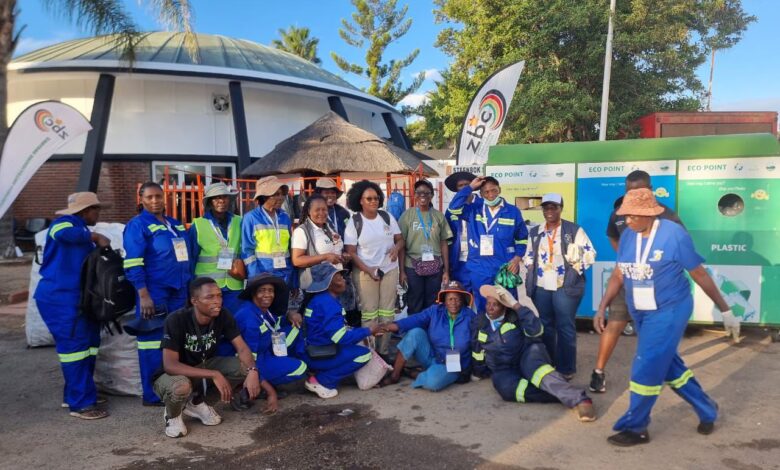
Inyathi High School volunteers at ZITF
By Nobukhosi Ndlovu
Green Hut spearheaded a waste separation initiative at the Zimbabwe International Trade Fair this week, advancing efforts to promote recycling while raising awareness about the importance of sustainable waste management practices.
According to the Green Hut founder and executive director, Cinderella Ndlovu, their main objective is to build environmentally conscious and responsible citizens through practical community-based interventions.
“Our aim is to raise an environmentally conscious, proactive and responsible citizenry,” Ndlovu said.
At this year’s Trade Fair, Green Hut is implementing a project called Greening ZITF, which focuses on separating waste generated at the event for recycling.
Ndlovu also explained that the initiative forms part of broader efforts aligned with the circular economy model under the National Agenda, which promotes the reuse and recycling of materials to reduce environmental impact.
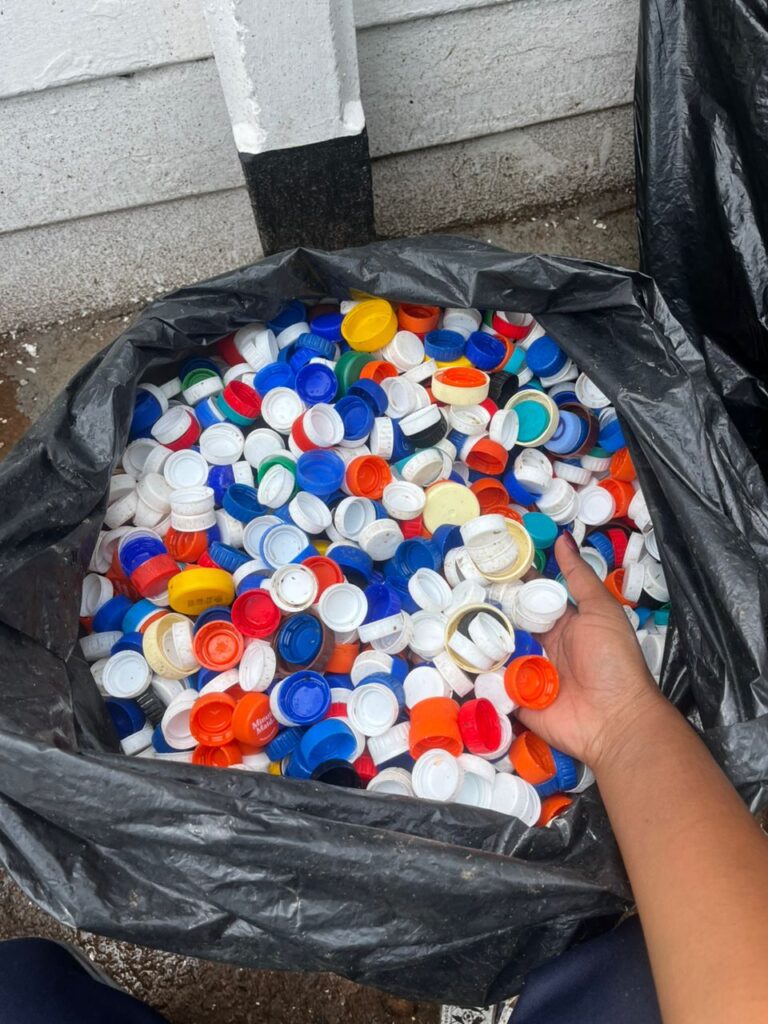
Waste collected at the site is separated into categories including cans, plastics, and PET materials, which are then directed towards recycling streams.
The project is being carried out in collaboration with trained waste management workers, volunteers, and environmental club members from Inyathi High School, Catholic Justice Commission for Peace alongside partners like EMA involved in waste production and mobilisation efforts.
Environment Club Patron at Inyathi High School, Nyaradzo Machingambi described the initiative as both educational and impactful.
“We are learning and doing the practical aspect of sustainability through the recycling initiative. Apart from sustainability issues, the programme is also promoting a litter-free environment at the exhibition centre,” she explained.
Machingambi added that the initiative reflects a commitment to action.
“We are indeed walking the talk of sustainable waste disposal.”
However, the initiative faced challenges, particularly around public participation in waste separation. Despite the provision of labelled bins, Ndlovu explained that some members of the public continued to mix waste which limited efficiency.
“We’ve seen that some members of the public are not adhering to the instructions of separating waste. That indicates there is still more to be done in conscientising people on waste separation,” she noted.
Ndlovu went on to mention how the activities happening at the ZITF grounds and resource limitations contributed as challenges, including the need for adequate protective equipment, staffing, and logistical support to manage the growing volume of waste collected at the busy exhibition site.
Despite these challenges, the organization reported positive engagement from visitors, with some members of the public actively bringing pre-sorted recyclable materials to the team.
“We’ve been seeing a significant change, with people coming to the bins with already separated waste and asking what we are doing. We are using those moments to conscientise the public,” Ndlovu said.
The initiative was described as a crucial source of job creation, environmental stewardship, and national sustainable development goals.
Ndlovu said they hope to expand the initiative at future large-scale events, positioning waste separation not only as an environmental necessity but also as a practical model for circular economy implementation in Zimbabwe.
Community Podium is the recipient of the 2025 Outstanding NGO Reporting Award. This reflects our dedication to amplifying community voices and advancing public-interest journalism.