Air ambulance service lands in Gwanda
By Kelvin Kutinyo
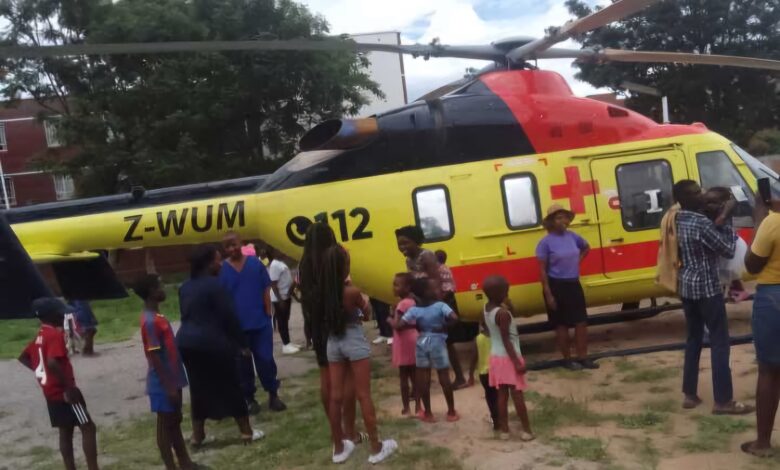
As the rotor blades of a helicopter whirred overhead, a cloud of dust enveloped St Christopher Primary School grounds in Gwanda recently, signaling the triumphant arrival of a lifesaving air ambulance in the scenic province of Matabeleland South.
The helicopter, which landed on the 19th of January 2025 for the first time in Gwanda, is specially designed to transport a single patient accompanied by three medical staff, ilife-savingto its two pilots. It is fully equipped with a range of life saving medical equipment, including oxygen supply systems, pacemakers, patient monitoring systems, defibrillators, and blood transfusion equipment, ensuring optimal care during emergency medical evacuations.
In circumstances, whereby a medical emergency involves both a mother and her child, the helicopter is permitted to accommodate both patients, alongside the medical staff and pilots, to ensure they receive timely and critical medical attention.
Dr Blessed Gwarimbo, District Medical Officer at Gwanda Provincial Hospital, emphasized that the introduction of the air ambulance marks a significant milestone in enhancing healthcare services in the province.
“It will drastically reduce the time taken to reach critically ill or injured patients in remote areas, providing faster access to specialized care saving lives in case of trauma, stroke, heart attack. The air ambulance can transport patients to advanced medical facilities in cities bridging the gap between rural health care and specialized treatment centres.”
“The air ambulance is staffed and equipped to manage a wide range of medical emergencies, including road traffic accidents, falls, industrial injuries. Timely intervention for stroke patients to reduce long term disability, maternal, neonatal emergencies and also cases requiring urgent surgical intervention that local facilities may be unable to perform,” said Dr Gwarimbo.
The mining region of Matabeleland South has a high rate of mining related injuries, creating a critical need for swift medical attention. The air ambulance service is a vital lifeline, capable of rapidly transporting injured miners to medical facilities, thereby saving precious lives.
Dr Gwarimbo also revealed that the air ambulance can be accessed and utilized by local residents within the region both rural and urban.
“For the service to effectively reach those in need, local Healthcare facilities and clinics will act as forts points of contact, determining when aire evacuation is necessary and coordinating with the air ambulance service. A dedicated hotline call center can facilitate quick response for emergencies”.
“There is need for awareness campaigns to educate the community about the availability of the service, when to use it and how it reach it will ensure maximum utility. Collaboration between health ministry, private operators and local stakeholders can subsidize costs and streamline operations for rural residents,” he added.
Ward 17 Councillor Mr Ntuthuko Nyathi praised the initiative, highlighting that it will significantly reduce emergency response times and save numerous lives by quickly transporting patients to hospitals equipped to handle critical cases.
“If such a service can be effective lives will be served and anyone who is development minded will applaud such a move. If they were piloting let them roll it out. Lives especially those from accident scenes and other emergencies can be saved,” said cllr Nyathi.
The challenging two hour road journey from Bulawayo to Gwanda, hindered by potholed roads and roaming livestock, is drastically reduced to a swift 25-30 minute flight when utilizing the air ambulance service, significantly enhancing emergency response times and potentially saving lives.
The significance of air medical transport stems from its capacity to swiftly and efficiently convey patients in critical need of immediate medical intervention or specialized care, bridging geographical gaps to access life saving treatments which are unavailable locally.