Mustard Seed Communities champions disability-inclusive childcare in Zimbabwe

By Sihlobo Bulala
Mustard Seed Communities Zimbabwe (MSCZ), a faith-based organization dedicated to the care of vulnerable children, continues to be at the forefront of disability-inclusive childcare, fostering a nurturing environment that values every child, regardless of their background or ability.
Currently caring for 47 resident children (23 boys and 24 girls), 43 of whom are living with various disabilities, MSCZ has grown significantly since its beginnings as a feeding program in 2002. Today, the organization runs three children’s homes, nutrition initiatives, two Little Angels preschools in Cabatsha and Woodville, a health clinic, a chapel, and substantial farming operations.
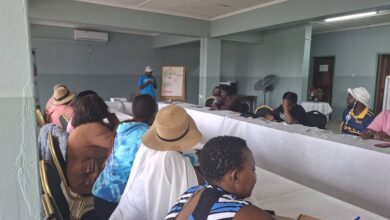
During a recent media tour of its Woodville premises in Bulawayo, Community Podium witnessed the organization’s wholistic approach to care, anchored in its mission to uplift society’s most marginalized, particularly children with disabilities.
“We want to give them all the love that they didn’t get from wherever they’re coming from, and we do not want them to feel abandoned again,” said one of the resident house mothers.
She explained that because the children come from diverse and often difficult backgrounds, MSCZ has created a warm, family-like environment where children are accommodated and supported in their unique needs.
Beyond basic care, the organization strongly emphasizes the importance of life skills development, particularly for children with disabilities who are capable of contributing economically to their futures.
Speaking during tour, Hazvineyi Zinyowa, MSC Fundraiser said, “Organizations like us are temporary placements. They are not permanent. And even looking at how we are raised in our families, you are raised to be someone who can look after themself, you are raised to be someone who is self-reliant. A skills approach ensures that there’s no sense of dependency.”
Zinyowa highlighted that one of the children, talented in beadwork, is now teaching others, a powerful example of talent nurturing, self-reliance, and peer learning in action.
“If a skill is identified, we nurture it. We try to ensure there’s income generation from that skill for the benefit of the child.”

However, not all children may be able to undertake such training due to the nature of their disabilities. In such cases, MSCZ advocates for supporting the child’s guardian or caregiver as an extension of the empowerment process. Speaking directly to the Little Angels Learning Centre (ECD) that freely enrols vulnerable children around the community to allow their guardians the flexibility to start saving and working towards primary school, Zinyowa shared that;
“It’s also important that as policy makers or as organizations in this field, we have an approach where you might not necessarily empower the child, but empower the guardian, especially looking at children who cannot undertake the skills training, and those who currently have their children enrolled for ECD at Little Angels,” she said.
“Yes, you may take care of the child’s fees for those two years but if the guardian doesn’t have the skills, they don’t have the access to the information or to capacity building, it means that those two years did nothing,” she said.
Building capacity among guardians through initiatives like community gardens and other income-generating projects was identified as something that can make the approach more sustainable and reduces long-term dependence on aid and donations.
“If we cannot empower the child, let’s empower the guardian, let’s empower the community. They should have their own income generating projects, if it’s a community garden, they should also participate in that garden, that way they do not depend on Mustard Seed and the donations that we get. If we can do that, then this approach becomes sustainable for everyone,” said Zinyowa.
This community-focused model also helps shift social perceptions around disability, particularly in communities where stigma remains prevalent.
Nkosinothando Dewa, the MSC Marketing and public relations shared that is important for the community to be part of such programs because it equips guardians of children with disabilities with knowledge that their conditions are not a curse.
“We are working on going out to communities, to educate them that disability is not a curse. Some people still look down on mothers who give birth to children with disabilities. We want our homes to be a place with children who are not abandoned, so that they also don’t feel that they were brought here because their guardians can’t manage or because they don’t want them. This will help in that when the children go back to the community, they don’t return feeling like they were abandoned, or the guardian feeling that they abandoned their child,” she said.
MSCZ’s work is sustained through donations, farming projects, and partnerships. They currently run a nutrition program in Woodville, Cabatsha, Magobho, Ngozi Mine, and Pumula where they are feeding at least 1200 children daily.