Mudenda tangled in recall drama
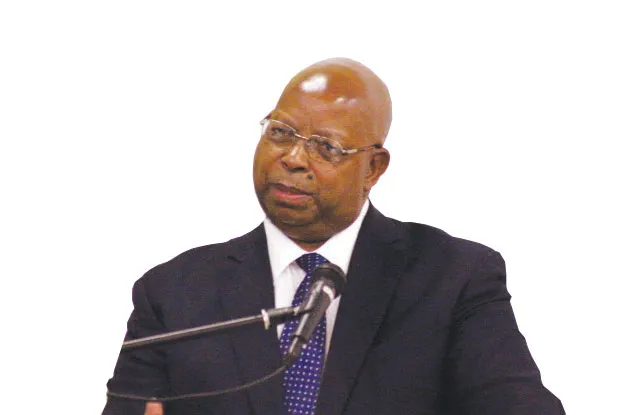
Zimbabweans are waiting with baited breath to see how the speaker of Parliament Jacob Mudenda will handle the case of a purpoted recall of 70 legislators of the ruling ZANU-PF.
This came to light during a virtual meeting under the theme “ZANU-PF recalls : what is the role of the speaker” where participants said the speaker’s response to the letter written by oneTafadzwa Manyika who claims to be the Interim Secretary General for the party is a critical test of Zimbabwe’s troubled democracy.
Ian Joule, a participant said, “This puts Mudenda in a conundrum as it lays burden on him to act consistently with the way he did on the Citizens Coalition for Change (CCC) members of parliament. We expect to see the same response because the letters are speaking to the very same issue and both have been issued by ‘Interim Secretary Generals’ of the two parties. This is more of a chess game and now the dice has been thrown at him.”
Another participant with username Advocate Herbert concurred with the previous speaker by adding that there has to be consistency on how the speaker of Parliament handles these cases as he applies the constitution.
“The speaker of Parliament should act in a manner that is in tandem with the constitution because he has a constitution at his disposal which he must follow and he should act guided by the constitution which I believe he followed when he actioned the CCC recalls and now we expect him to do due diligence over this issue and practice lawfully.”
However, Political analyst and activist Zethi Dube challenged section 129 of the constitution arguing that it does not provide clear procedures on recalling party members.
” Section 129 (1)k should be challenged to give specific procedures of authenticating and verifying the recalls because at this point anyone can recall any member through fake statements that do not even originate from the party structures. This section gives opponents a political playing field due to its loophole. Without a clause to allow the speaker to adjudicate recalls, there is a huge gap where Mudenda is spared from verifying with parties on the authenticity recalls. His role is to receive letters and act without going back to party leadership and verifying.
After recalls, queries and disputes can then be settled at the courts which then enhances separation of power but this lack of adjudication from initial stages is bound to cost parties. Mudenda does not have powers to adjudicate if the letter is fake or not but has to act as the section puts it that the speaker recalls members if he receives a letter from the political party indicating that an MP has ceased to be a member of the party.
Section 129 (1)(k) has two requirements that must be satisfied for a Member of Parliament to lose his or her seat. These are: the Member of Parliament must have ceased to belong to the political party of which he or she was a member at the time of election and the political party concerned must by written notice to the Speaker of the National Assembly or the President of the Senate, have declared that the Member of Parliament has ceased to belong to it but there is no need for verification there which fuels illegal recalls”.
Manyika wrote to speaker of Parliament recalling the 70 ZANU-PF members on the basis that they have ceased to be party members.
Last week, Mudenda wrote to the Zimbabwe Electoral Commission (ZEC) confirming the recalling of the 15 MPs instigated by the self proclaimed “Interim Secretary General” of CCC Sengezo Tshabangu. Mudenda ignored CCC’s president Nelson Chamisa’s advice to disregard Tshabangu as he is not a member of the party.
Meanwhile, 13 of the affected MPs, Prince Dubeko Sibanda, Bright Vanya Moyo, Velisiwe Nkomo, Jasmine Toffa, Sitabile Mlilo, Pashor Raphael Sibanda, Nicola Jane Watson, Eric Gono, Evidence Sunungurai Zana, Morgan Ncube, Obert Manduna, Janeth Dube, Desmond Makaza have since approached the High Court, challenging their recalls from parliament.