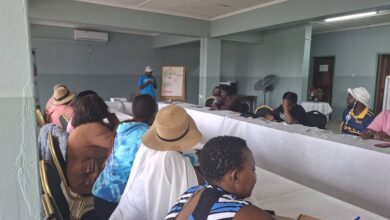
Mandihongola villagers call for accountability, consultation and environmental protection in mining operations

By Sindiso Ndlovu and Sihlobo Bulala
Community members in Mandihongola (Ward 11) in Gwanda District have expressed growing concern over the operations of the Chinese-owned Gwanda-Lithium mining company, accusing the business of failing to properly consult residents, honour community agreements and protect the environment.
Villagers say the mining activities have brought widespread dust pollution, destruction of grazing land, damaged fields and disruption to the local ecosystem, while employment opportunities promised to locals have allegedly benefited outsiders. Residents also raised concerns over poor communication, lack of accountability and frequent changes in mine management, which they say have made it difficult to resolve grievances.
Community members say the company arrived in the area without properly introducing themselves to the community or consulting local leadership. By the time villagers began asking questions about who the newcomers were, mining activities had already started. Consultants for the company later advised the community to prepare and present their needs before operations began, but villagers say the process came late because excavation work was already underway.
In response, community members organised themselves by forming a mining committee that drafted a detailed document outlining their expectations. Their requests included improvements to roads and bridges, environmental protection and fair engagement with local people, however this did not improve their relations.
“What I have realised with the Chinese is that they do not take any document coming from you and they don’t sign anything, even if you want to agree that you will do this at this time, they don’t want. As it is, that committee is still there but it’s like it’s a sketch because of the challenges that are there, tomorrow you go and you’re told to come another time or to bring this and that and sometimes you are chased away,” said one community leader.
Refusal to sign documents or acknowledge written commitments has further presented complications in making follow ups with new management, with residents saying each new administration demanded that discussions begin from scratch. This has made it impossible to hold the company accountable for previous promises.
“Lack of records is the biggest challenge. You cannot tell me that when changing a manager, you are changing everything. This thing that we are being told by the Chinese that when management changes we are supposed to write our expectations again is not good,” added another villager.
The environmental impact described by residents paints a troubling picture. Dust from heavy mining vehicles reportedly settles on homes, trees and grazing land throughout the day. Villagers say mopane worm trees have been damaged, grasslands destroyed and crop yields reduced. Community members also fear the disruption of the local ecosystem, explaining that snakes that once controlled rodent populations are dying because of excessive soil disturbance, leaving rats to invade nearby fields.

“If you look around the area, the ecosystem is now affected. We have snakes there, we want them. Snakes bite but they play a huge role in the ecosystem but now they die because they can’t travel in too much soil. All those rats that were meant to be consumed by snakes, were do they go now? They now go to our fields,” the villagers said.
Employment practices at the mine have become another source of tension. Villagers claim recruitment processes favour outsiders over locals, despite promises that the majority of jobs would go to community members. Some residents allege that candidates from outside the area are given advance tips on unfamiliar machinery and vehicle systems before interviews, placing local applicants at a disadvantage. Community members say many local youths remain in low-paying, menial jobs while outsiders secure supervisory roles.
“Most of our children are daka boys while someone can come from outside the community and they become supervisors. There are things like that although they will be concealed in some ways. At one time we experienced a system whereby there are vehicles that are coming from the East, and their gear systems have just a small difference with ours. People from Mashonaland are given tips that there are vehicles like this and are advised to get familiar with them.
Come interview, I will be going there for the first time, I’m meeting the system for the first time, while the other person would have been tipped. I don’t mean that learning is a bad thing but, in this case, they learned with the intent to come and take the job. So, when we are going for the interview, obviously I will fail and within the community what remains is the assumption that I’m not familiar with vehicles but that’s not true. There are such issues, they might not come out well, but they are there,” shared another villager.
For many community members in mining communities, the central issue is not simply mining itself, but the fear that communities are being excluded from decisions affecting their land, livelihoods and future generations, while not bearing any tangible benefits from the economic activity. Residents say meaningful consultation, accountability and environmental protection will be essential if trust between the community and mining companies is ever to be restored.
“My request is that when these mines are coming in our midst, can they have honest coordination with the local leadership and community members so that we are able to speak with them and they can carry on with their work well, while we also live well. There are many things that they are doing within the community that we want but the bad outweighs the good.
“The Chinese shouldn’t come with that mentality that locals have nowhere to go. That’s why you see that they do not have any records, they say go and write again, they are doing whatever they want in our midst. So, these things should be fixed. The relationship between the miners and the community should be fixed so that things are done in order,” advised another villager.
Many residents believe weak enforcement of environmental laws has worsened the situation. They accuse some authorities of accepting bribes while failing to ensure compliance with mining regulations. Villagers also expressed concern that they lack the legal power to challenge foreign-owned companies operating in their communities.

“Environmental laws are there but only bribes are being used. Someone who mines has money. If only the rights that government organisations involved in controlling mining activities were given to an environmental committee within the community that could monitor them and see that what we have agreed on has happened. We could be somewhere.
“Right now when they want this soil that we’re standing in, they won’t come here and talk to anyone. We will just find the excavator loading. They do not ask, they do not consult. There are pits all over the place and everyone including our children, livestock and cars is at risk.
When we are here in villages, we think it is within our mandate to deal with someone who does wrong within the community because we have power over speaking on crimes done by a local person but we do not have the power to do the same to a foreigner. When they come here, they already come bearing power over us,” the villagers said.
Despite their grievances, residents insist they are not opposed to mining activities because they appreciate the benefit that could be realised by the local community. Instead, they say they want honest engagement, transparency, respect and evident development.
“We have schools. Schools are a source of development but our schools are lacking. You can find some schools without doors but we have a big mine, Gwanda-Lithium, in our community. Just a thousand dollars these schools would be painted, with locks. But nothing is happening. Without even talking about equipment for laboratories. Besides that, we were made to sit down and write equipment for school labs. We wasted our time but nothing has been done. Community members are the ones who have come together to develop the schools,” another villager added.
Villagers recommended that government agencies should work more closely with community committees to monitor mining operations and enforce environmental protections. They also called for mining laws and policies to be translated into local vernacular languages so ordinary residents can understand their rights and obligations.
Community Podium is the recipient of the 2025 Outstanding NGO Reporting Award. This reflects our dedication to amplifying community voices and advancing public-interest journalism.