Gwanda district farmers benefit from modern farming methods
By Jonah B Moyo
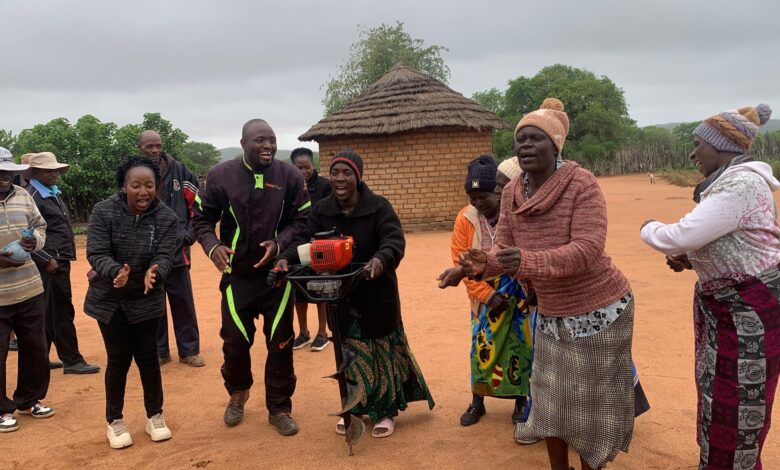
Welthungerhilfe’s (WHH) Humanitarian Drought Response Programme has transformed Gwanda district farming methods by distributing soil augers to 172 farmers from 15 groups, enabling Pfumvudza/Intwasa practices which will improve food security in drought-prone communities.
Humanitarian Drought Response Programme is a joint initiative by the Government and development partner Welthungerhilfe (WHH).
Farmers invested 50 percent of the soil auger cost, with the project implementers covering the rest remaining amount. This partnership revolutionised traditional farming replacing labor-intensive hoe-digging with efficient machine drilling, saving time and boosting productivity.
Farmers enrolled in the Pfumvudza/Intwasa programme have expressed that these augers have made their practices easy.
Slibaziso Ndlovu from Samlodi Ward 14 was amazed at how the auger machine enabled her to plough her field quickly a task she previously thought would take months now completed in record time.
“We used to plough our fields for about a month doing Gatshopo but now with the introduction of aurger machine as a group from WHH this machine helped us in our Gatshopo farming as we have already finished farming and we are now left with other jobs in the farming and our crops are shinning we are looking forward wars for good harvest,” she said.
She also added that the way of farming they used this season could led to a successful harvest which could lift them out of poverty.
“In our drought-prone area Gatshopo farming is our best bet, but traditional methods were labor-intensive and limiting. With the auger machine, we have managed to overcome these challenges we are expecting a good harvest which will led to food security for or families,” Ndlovu said.
The Government has begun mechanising the Pfumvudza/Intwasa programme by introducing equipment like soil augers and tractors.
Matabeleland South’s Director of Agricultural and Rural Development Advisory Services(ADRAS), Shupikai Sibanda urged farmers to adopt mechanisation to boost productivity and efficiency, hailing initiatives like the WHH’s auger machine distribution as a game-changer.
“Where individual purchase is not feasible farmers can pool resources collectively to acquire machinery, sharing the benefits and costs, thereby making mechanisation accessible to more,” she said.
Earth augers are priced between $135-$250 and they are now within reach as there are several companies which are selling them and some are selling them in butter exchange. These machines arepetrol-powered models cutting Pfumvudza/Intwasa planting time to under an hour from three days of manual labor.
“This is a worthy investment for every farmer who is enrolled under the Pfumvudza/Intwasa programme, not just the elderly or the not-so-physically-strong. The cost is competitive if we consider the work that the machine does. A soil auger holes out a standard Pfumvudza/Intwasa plot in less than an hour yet manual holing of the same size of land would take three days or even five.
Wider adoption of the soil auger will ease the physical burden on farmers. It enhances their efficiency and saves time,” Sibanda added.
She encouraged communities to leverage government support programmes aimed at helping farmers cope with climate change emphasising the importance of abandoning traditional farming methods in favor of more resilient approaches.