Environmentalist urges action against farm bricks
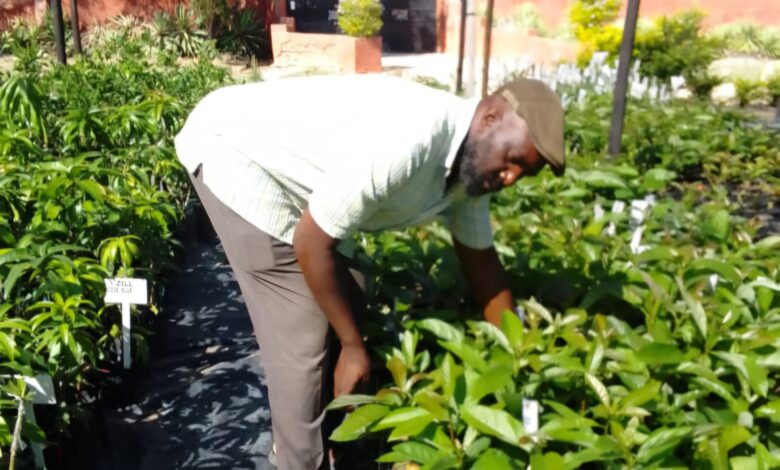
Environmentalist and National Tree Ambassador, Never Bonde, has urged small town local authorities and Rural District Councils to ban the use of farm bricks in their areas.
In an Interview with Community Podium, Bonde cited the environmental dangers of homemade bricks which include massive land degradation and deforestation due to the large amount of soil and firewood used in their production.
“Small town local authorities must find a way to block the use of farm bricks in their areas. Farm bricks contribute to deforestation and soil erosion because they require a lot of firewood to mature and become ready for use,” Bonde said.
Specifically mentioning areas like Kezi Maphisa, Tsholotsho, Plumtree, and Ekusileni, Bonde suggested alternatives like plastic bricks and urged authorities to act with urgency. He also called on religious groups that use firewood during all-night prayers to plant trees regularly.
Tonderai Shoko, another environmentalist, highlighted the need to educate communities to adopt environmentally friendly brick-making methods, such as using clay and sand, interlocking bricks, or soil cement bricks, instead of traditional practices.
“The traditional ways affect our environment deeply. Trees getting chopped without a tree planting drive will lead to deforestation, which contributes to climate change. There is displacement of wildlife, with birds being the most affected, and as a result, we are on the verge of some species being extinct,” he said.
Simon Musasiwa, EMA Matabeleland South Environmental Education and Publicity Officer noted that the challenge is rife in Mashonaland and that if the practice is done commercially, it presents land degradation challenges like deforestation, soil erosion, gully formation, disused open pits, unprotected water pools that pose a danger to the public and livestock.
“For one to carry out farm brick production on a commercial scale, one needs to obtain a permit from the RDC, Forestry commission, and EMA after the production of an environmental management plan (EMP). Failure to do this will result in penalties as an offence would have been committed as per statutory instrument 7 of 2007, Forest Act Cap 19:05; and the by-laws of the host local authority,” he said.
A local artisan, who wished to remain anonymous, highlighted the economic importance of farm bricks, prompting questions about how to balance environmental concerns with economic realities.
“We earn a living through making and selling these bricks. Perhaps our authorities can designate specific areas for us to work,” he said.