Could promoting cultural values and appreciating the beauty of a well-managed city curb corruption?
By Sihlobo Bulala
Ongoing stakeholder engagements aimed at finding effective solutions to curb corruption within local government authorities have sparked fresh perspectives and alternative approaches. Among these is an interest in how civic culture and pride in a well-managed city can be harnessed as tools to combat persistent corruption.
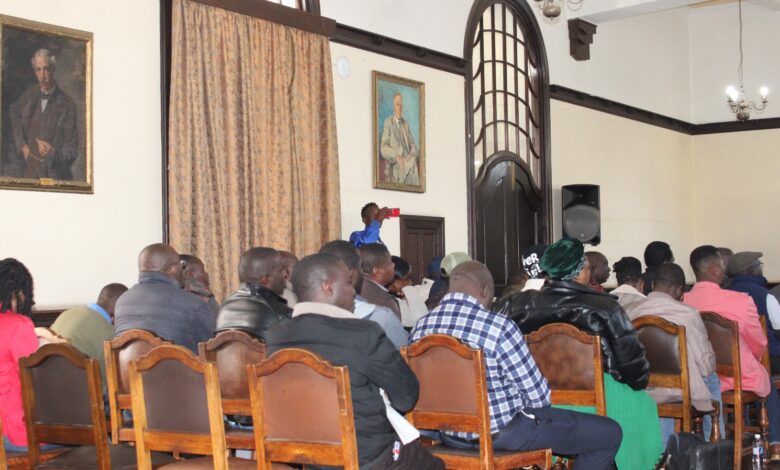
This shift in focus invites critical questions about the role of community values, identity, and collective responsibility in promoting transparency and accountability at the local level, and was identified during a public policy dialogue meeting conducted by the Centre for Innovation and Technology (CITE), Bulawayo Progressive Residents Association (BUPRA), and the Public Policy and Research Institute of Zimbabwe (PPRIZ) held in Bulawayo recently.
Speaking during the engagement, John Mupa, a local resident based in the diaspora highlighted that outside of deep-rooted corruption which occurs in local government authorities, there is a general lack of appreciation of beauty which is one way to ensure that public resources are efficiently utilised for the benefit of the community.
“There has to be an appreciation of beauty in the city. Corruption which happened about the 285 drums is a deep-rooted corruption but there are drums which are an eyesore in town. The appreciation of beauty can actually tell you that there was corruption involved. Instead of putting slabs which make the city beautiful, it shows you that you don’t appreciate beauty hence people will do whatever they want,” he said, further likening it to people pursuing education so that they have a status and a sense of well being in a community based on their appreciation of beauty.
“The embracement of illegal miners who are degrading the environment is an erosion of beauty; hence we see machete wielders all over the community because we do not appreciate beauty,” he said, further emphasizing his submission.
Nesisa Mpofu, the Bulawayo City Council’s Corporate Communications Manager concurred with the sentiments as she highlighted that the state of corruption, while mitigation measures can be scaled at institutional level, is something that can be tackled when the change starts within individuals.
“We have to change the way we think about corruption and bring it at individual level. The beauty that was shared here is beauty that needs to start with us as individuals. We will be saying that Bulawayo is dirty but among us there could be some people who are still littering,” she said.
Thabani Mlotshwa, another resident differed with the idea of tackling corruption through the appreciation of cultural values, highlighting that the solution lies in making arrests.
“There is no tree you can go to anywhere in town and eat. It stinks. So, people should get arrested. Let’s not rely on Ubuntu anymore because Ubuntu no longer exists,” he said.
Tobias Guzura, a lecturer at the Zimbabwe Open University shared his concerns about the health hazard posed by activities happening along Fifth Avenue in the Bulawayo CBD.
“Are we seriously saying that council is not aware that fifth avenue is a health hazard, fifth avenue is an eyesore. Or maybe someone is actually getting something from that scenario that is on fifth avenue behind the scenes without our knowledge. Maybe it’s actually a conduit for corrupt tendencies for those people to be left like that,” he said.
“One would want to ask what are the revenue streams like for those vendors who are selling their wares along fifth avenue. We need to hear a response that will speak to that, where they are saying they have left those people because they are funding key council activities. Is council getting any financial revenue from those activities along fifth avenue, or revenue is being made for private pockets?’’ he asked.
Lizinethi Beta, a representative from Emthonjeni Women’s Forum (EWF) echoed the sentiment that promoting an appreciation of beauty could serve as a tool to curb corruption. She reflected on the city’s heydays during her upbringing, recalling a time when Bulawayo ranked among other clean cities in the world.
“What we are seeing now is really an eyesore. If we look at alleys these days, they are scary because of the heaps of dirt there. Bulawayo City Council should be clearing these places. We are seeing pampers and other dirt that is always there. It always stinks, with dirty water flowing, and with thieves grabbing women’s purses and using those alleys to escape,” she said and further questioned how such things will be addressed as residents expect to have a clean city.
“If all these alleys could be cleared, and have gates erected on both ends so that those who wish to escape their criminality fail. Also, these are places that should be monitored constantly so that Bulawayo returns to what it used to be,” she added.
One of the action points that was noted by BCC’s Corporate Communications Manager was the need for continued civic engagement.
“There is need for continued civic education if we are going to look at things like culture, look at things like dialogue in terms of how services are provided. Another thing we are asking is that there are other stakeholders that can assist us to ensure that we have a wider spread when it comes to education,” she said, mentioning that associations and civil society organizations can partner with the city council to drive meaningful improvement.