Memorialisation: Zim’s path towards healing
Fiona Mpofu
Zimbabweans have been urged to document their history by taking advantage of historians and participants of history who are still alive to tell their stories.
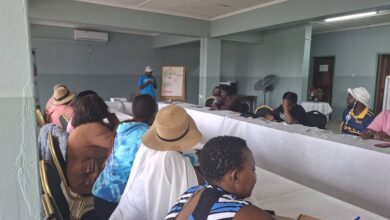
The appeal call was made Tuesday at a Memorialisation documentary screening in Bulawayo, hosted by the National Transitional Justice Working Group Zimbabwe.
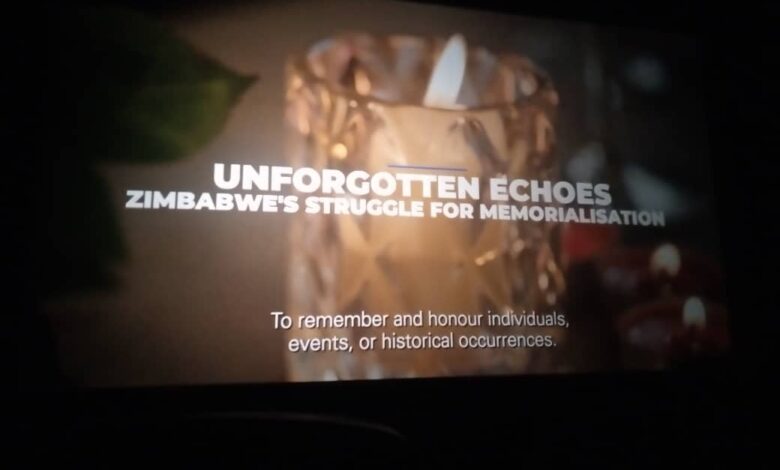
The documentary, ‘Unforgotten echoes Zimbabwe’s struggle for Memorialisation’ captures stories of some of the survivors of Gukurahundi and how failure to resolve this issue has affected relatives of those who lost their lives during the atrocities.
“When we talk about memorialisation, we are talking about transferring memory from one person to another person, laterally as well as vertically. Moving from one generation to the other,” explained political analyst Effie Ncube.
He further explained that memorialization could help prevent similar atrocities in future.
“Zimbabwe has had conflict for over 100 years at a minimum. We have moved from conflict to another and we therefore need to understand what it means to move from one conflict dispensation to another to break the cycles of conflict,” he added.
A participant at the documentary screening who identified himself as JB bemoaned the lack of depth in Gukurahundi documentation as he argued that what has been documented is only a tip of the iceberg.
“The Catholic Commission for Justice and Peace (CCJP) and Legal Resources Foundation scratched the surface in the book, ‘Breaking the Silence: Building True Peace.’ We have to go deeper than that before these living historians perish,” said JB.
Participants also raised concern on the documentation of history in light of the abductions that have been happening post elections.
“We have to raise the cost of autocracy, by that I mean when these things happen let us make sure that the state feels that something wrong has happened. I gave people an example of two situations, the abduction of Jestina Mukoko and the abduction of Itai Dzamara,” responded Fortune Kuhudzewe, coordinator at National transitional justice working group Zimbabwe.
He added that Itai Dzamara’s case turned into a disappearance because of delayed reaction.
“When Itai Dzamara was abducted it took people almost a week for them to start talking about it. When Jestina Mukoko was abducted, people started making noise and I think the contrasting results tells us which kind of reaction is more effective.”
“One thing that we are doing is to create a trail record within the formal system of the court so that when the time comes there is a formal record to say on this particular day this person was abducted, there was this court case that was mounted and you swept it under the rug,” added Kuhudzewe.
Ibhetshu Likazulu coordinator, Mbuso Fuzwayo, explained that the erection of memorial plaques in the affected areas is a way of documenting history.
Chairperson of National Transitional Justice Working Group Zimbabwe Themba Nyathi told the attendants that the problems that Zimbabwe is facing emanate from the absence of repercussions, hence perpetrators continue to cause more trouble.
“What we can do now is to accept that this atrocity happened. Secondly, the affected families need reparation and that is not payment because one cannot cannot pay for a person’s life,” said Nyathi.