Nkayi small holder farmers thrive in climate adaptation
Witness Dlamini
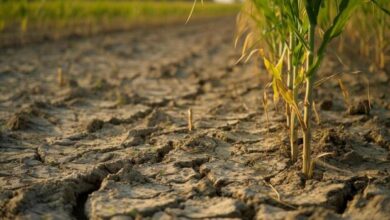
Nkayi is a poor rural district in Zimbabwe which is principally a rain fed agricultural area. Erratic and variable rainfall of approximately less than 650 mm yearly and regular droughts experienced every 2 to 5 years, exposes farmers to climate change as agricultural production is compromised.
According to the Zimbabwe Vulnerability and adaptation assessment (ZimVAC) of 2013, the district has the highest poverty rate in the country with more than 76% of the rural populace living below the poverty datum line (<1.5 USD per day) while above 22% of the population being tremendously poor (living <1USD per day) (ZimVac, 2013).
Food self-reliance fluctuates from 3 to 10 months dependent on the annual rainfall received thereby enhancing the vulnerability of the rural folks to the adverse impacts of climate change. Scholars such as Homann-Kee Tui et al (2015) maintain that agriculture systems in Nkayi are mainly dominated by maize and cattle production. Contemporary crop harvest levels in the district are tremendously low, comparable to the nation-wide average.
Small holder communal farmers in Nkayi district have come up with various climate change adaptation and mitigation measures in a bid to enhance agriculture productivity in the mist of climate change.
The farmers seem to favour enthno-science strategies since they are less expensive and are based on indigenous knowledge systems. The enthno-scientific approaches adopted by small holder communal farmers towards climate change adaptation and mitigation in Nkayi are as follows.
Crop diversification: This strategy involves planting a variety of different crops so that in case other types of crops crop fail as a result of harsh weather conditions, the persisting/ surviving crops act as safety nets. Consequently, they cultivate a mix of crops including maize, millet, rapoko, groundnuts and roundnuts together. The ability of legume crops such as groundnuts to fix nitrogen enhance soil fertility thereby promoting survival of other crops such as maize which require high amounts of nitrogen. In areas such as Dakamela, Gwampa and Gwelutshena villages, farmers usually multi and mix crops particularly groundnuts (Arachis hypogaea) with drought tolerant crops such as rapoko and millet.
Joseph Tshabalala from Mfanovelayo village in ward 16 said he has been practising crop diversification since 2012.
“We were trained on this strategy by one extension officer named Lizwe Ndlovu. We plant mainly millet, sorghum, groundnuts and maize and we learnt that mixing crops such as maize and leguminous crops such as groundnuts enhances yields as the legumes fix nitrogen to the soil thereby improving soil fertility. This approach has greatly assisted us as we have never had famine in our home and we are able to send our children to school using revenue obtained from selling farm produce at Nkayi growth point,” he said.
Dry Planting: This strategy is incorporated to counter uncertainty in start of Season. Lad preparation and planting of crops is done in September and October prior to the rainfall. This practice is known as Ukuphalela in the local Ndebele dialect. Farmers adopt this strategy to ensure sprouting of the already sown seeds when the first rains come and it counters the uncertainty and unpredictability of rain seasons. Millet is the main type of crop which is dry planted especially in areas such as Mbuma, Matshena and Lukampa villages.
Ntombizodwa Moyo from Mbuma area is a widow who has taken up the dry planting strategy and enjoyed considerable success.
“Due to the prevailing rainfall patterns and high temperature conditions, I have resorted to planting millet as this crop is drought tolerant and can survive the scorching heat experienced in this part of the country. To enhance my chances of getting a good harvest, I practise dry planting to capitalise on the early rains. I usually plant my first crops in October before any rains.
Cultivating drought tolerant small grains: With the district receiving low and erratic rainfall coupled with high temperatures, farmers have resorted to growing small gains which are drought tolerant such as millet, rapoko and sorghum. While maize is the staple cereal for the country, the existing weather conditions makes it impossible to grow it. Consequently, small grain crops are appropriate since they can survive in arid conditions thereby ensuring food security during drought spells.
Early Planting: Small holder communal farmers in Nkayi district practice early planting in order to take advantage of first rains and full length of season. Centred on the profound knowledge of their agro-ecological conditions coupled with anticipation of a good rainfall season as indicated by indigenous indicators such as animal behaviour, crops are planted during the first rains
Livelihood Diversification: In a bid to adapt to the climate change effects, communal farmers in Nkayi district have diverted from solely relying on agriculture by diversifying their livelihood options. Selling of local fruits, mopane worms and small scale gold mining are some of the livelihood diversification approaches which they have adopted. Communal farmers in areas such as Gwitshi in ward 21 have mainly combined farming activities with gold mining in the area. This has enhanced the resilience of these farmers to droughts as they are able to survive even in times of extremely low rainfall.
Climate change undesirably impacts livelihoods and food security in rural societies such as in Nkayi district which heavily depends on rain fed agriculture. The communal small holder farmers in Nkayi district have come up with entho-scientific adaptive strategies to survive in these tough times of enhanced climate change. The climate change adaptation approaches include crop diversification, dry planting, early planting, planting drought tolerant crops and livelihood diversification.
Matanga and Jere (2011) postulate that climate change adaptation and mitigation is commonly divided into two broad groups namely ethno-science and techno-science adaptation strategies. Ethno-science strategies are grounded on local people’s gen on their physical environment whereas techno-science strategies include contemporary technologies.