
Matobo youths champion socio-economic change with Tsotso stove production
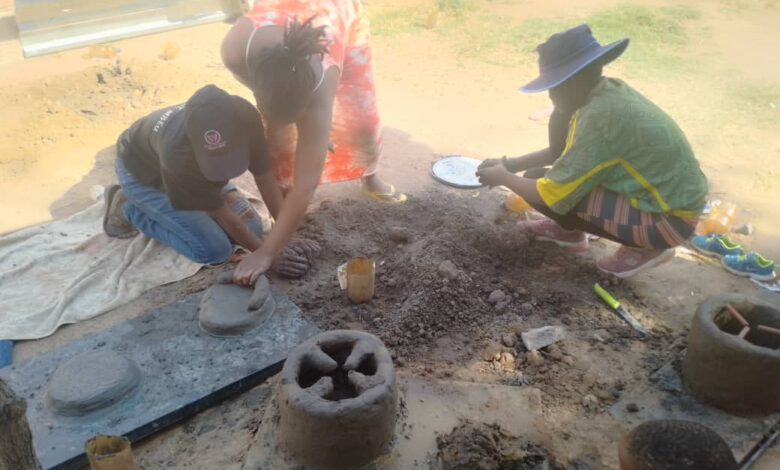
Innovative youths from Matobo have started production of Tsotso stoves, an economic innovation that answers socio-economic and environmental challenges faced by communities in rural areas.
Determined to make an impact within their community, a group of 4 youths and women from wards 7 and 8 in Matobo, consisting of Princess Moyo, Sakhile Ndebele, Sasha Ndebele and Sibikwaphi Sibanda have committed to a project that will help realize their economic empowerment. Their Tsotso stove innovation also tackles other socio-economic and environmental challenges they have witnessed within their communities.
“We noticed that there is a lot of cutting down of trees in our area then we thought, how about we find something that can reduce the cutting down of trees, and Tsotso stoves were the answer,” Princess Moyo said.
Tsotso stoves are uniquely designed open clay pots used as a cook stove. They are created using clay soil, red soil, sand soil, water, ash from cow waste, and mayonnaise empty bottles.
According to the group, It takes them approximately four days to make them. Sharing about the process, Princess highlighted that in the four day production timeline there are specific tasks which they attend to.
“On day one in the morning, we soak the soil with water for it to become soft, and in the afternoon, we start moulding with our hands. On day two, we mould again using mayonnaise empty bottles. During day three, we observe and check if there are no cracks, and if there are, we fix them. On day four, we then leave them exposed to the sun.”
Besides lessening the cutting down of trees, the group has a vision to introduce the innovation to other young people who can earn an income through its production. They believe this practice will also contribute to the reduction of Gender-Based Violence (GBV) as women from the community will be able to generate income through selling the stoves.
“And again it’s going to reduce the spread of STIs because as we’ve noticed most of the youths tend to be in relationships just to get money for food but if they’re involved in this, life is going to be a bit easier for them,” Princess Moyo highlighted, while one of the group members, Sakhile Ndebele, further emphasized their position as women who have seen the unfortunate experiences of youths and women in the community by sharing;
“As in this group, we are women and youth, we want to prevent cutting of trees and also prevent poverty. Once there is no food at home, it causes school dropouts and diseases. School children will start dating thinking that dating will fight poverty whilst dating will result in school dropouts and diseases. “
While the group shared that making Tsotso stoves is not as easy as they thought, they admitted that it’s manageable given that they’re not buying anything to make them and it only needs their time and concentration. In the conversation, they also highlighted the vision they have to expand the innovation to other areas.
“Since we are still new at this, we want to try and distribute one Tsotso stove per Village Head so that they can introduce them to their village people, ” Princess Moyo highlighted, adding that they are hopeful that the project is going somewhere as they are getting a few orders from people who usually see their WhatsApp posts advertising the stoves.
The young women anticipate that the project will make the lives in their communities easier and simple since there won’t be any need for searching for firewood as they will be using cow dung and shavings.
Sasha Ndebele highlighted that the vision of the group is beyond making Tsotso stoves as they’re determined to see the betterment of their communities.
“We hope to create employment for youths and women in the community, and we are committed to protecting our forests, and even to promote our culture too. We grew up in households where it was common to use cowdung to clean the floor, but that is no longer common,” she said.
In the future, the group hopes to see their earnings from Tsotso stoves extending their business prospects, which will create jobs within their community as they wish to start other projects like poultry.


