Matobo youth forge path to green economy
In the semi-arid landscapes of Matobo District, where erratic rainfall and poor soils have long challenged traditional farming, a new generation is rewriting the narrative.
The community-based organization, Matobo Youth Development Initiative (MYDI), is spearheading a transformative project that seeks to turn environmental constraints into economic opportunities and empower hundreds of young people to become trailblazers of a green economy.
Targeting a minimum of 500 youths aged 18 to 35 by 2028, the Youth Employment and Entrepreneurship program is a direct response to the twin crises of youth unemployment and climate change.
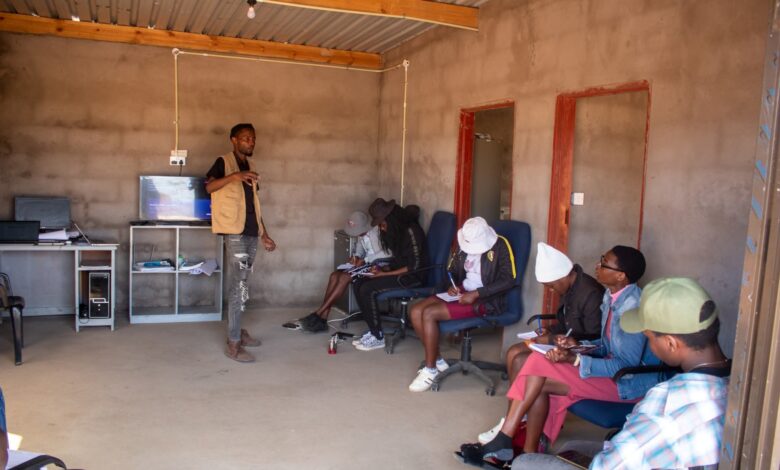
Through intensive training in agro-food systems, renewable energy, and business management, MYDI is fostering a wave of climate-smart entrepreneurship designed to be both profitable and sustainable.
“We’re not just creating jobs, we’re creating sustainable futures,” said Constantine Mpofu, MYDI’s programmes manager, emphasizing the long-term vision behind the initiative.
He explained that the program began with a district-wide survey to identify viable opportunities tailored to the region’s harsh reality.
“Because of the context that we live in, we have a challenge. We are living in a semi-arid region, so we’re trying to develop climate-smart opportunities and businesses. Something that can be resilient,” said Mpofu.
He detailed a focused approach on practices like small grains cultivation, goat farming, and roadrunner chicken rearing enterprises that thrive where conventional cattle and rain-fed agriculture fail.
“It’s about tapping into our problem using opportunities that are unveiled,” he stated.
The initiative’s support extends far beyond basic agricultural training. A core component involves equipping participants with the mental and financial fortitude to succeed.
“We believe that if these youth have strong mental health, they can withstand stress and they can think long-term instead of short-term,” Mpofu said, describing the soft skills and psychosocial support training that helps young entrepreneurs navigate challenges.
This holistic support is already yielding tangible results for beneficiaries like Nkanyiso Ncube from Fumugwe ward 18 . After returning from abroad in search of greener pastures, he started a poultry project and was later recruited by MYDI.
“I chose a green skill because I care deeply about the environment and also saw a business opportunity in sustainability,” Ncube said, his voice filled with conviction as he described the shift in his perspective.
“It wasn’t just about the money, it was about creating solutions that benefit both people and nature. The most valuable thing I learned was how to turn an idea into a sustainable business,” he shared.
His venture, which includes broilers and eco-friendly briquettes, earned him $270 in August alone. He now envisions his business scaling up, employing more local youth, and expanding its reach.
“This journey has made me see Matobo not as a place to escape from, but one with real potential,” he said.
Thubelihle Dube from Ward 13 specializes in small grains farming, a practice she adopted for both income and environmental reasons.
“The most valuable thing I learned is climate change and its hardest part, which is adapting to its conditions,” she remarked, highlighting the practical resilience gained from the program.
With a recent monthly income of $186, she is confident about the future and believes there is no challenge without a solution.
“Living in Matobo, which is in a dry region, is not a problem when you have suitable resources,” she said.
A critical element of MYDI’s strategy is bridging the gap between producers and markets. Mpofu detailed their active engagement with the private sector to ensure the youth’s products meet commercial standards and have a ready buyer.
“We link the producers and the market as we approach the market and inform them of the youths who produce, for example, eggs, and they provide and get their money.”
For Nkosilathi Ncube, the journey began with a desire for self-reliance.
“I started off as a farmer and small-scale businessperson, mainly focusing on broilers, rabbits, goats, and road runners for both livelihood and sustainability purposes. My goal was to feel the power of being an entrepreneur,” he said.
His enterprise, Achievers, is an agroecological farming business that has become well-known in the community for its reliability.
Ncube chose to hone his green skills with MYDI because they benefit both the environment and his finances.
“As an entrepreneur, environmental sustainability is the key to long-term success, money comes second. We value the environment because it sustains our businesses,” he explained.
For him, the training’s most impactful lesson was financial literacy. “As a businessperson, it’s difficult to manage finances while also focusing on production, but this skill has been a game-changer. I was proud to be able to track every dollar I made down to the last coin.”
The journey of producing and selling has allowed him to walk with his head held high.
“I no longer rely on handouts, I’m working towards being a shield that guards the future of the agri-food system.”
In the next five years, he sees his business expanding, creating employment, and becoming fully registered.
“Most importantly, this journey has built my confidence. I now knock on doors I once thought were closed to me. And I’m proud to be called a Matobo Youth Entrepreneur,” Ncube stated.