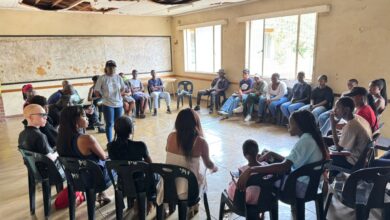
Lupane farmers find relief through subsidized stock feed

Thembelihle Mhlanga
Lupane – Local farmers in Lupane are breathing a sigh of relief thanks to the USAID-funded Amalima Loko project, which has begun providing subsidized stock feed to help combat the dire effects of the ongoing drought. With pastures depleted and cattle suffering from hunger, this initiative has come as a timely lifeline for many in the region.
Mandla Nkomo, a farmer from Solobela in Matshiya Ward 15, expressed his gratitude for the support. “My cattle were dying from hunger. This project has saved their lives,” he said, his voice filled with emotion. “I can now feed my livestock properly, and it gives me hope for the future.”
The project is part of a broader community drought resilience initiative aimed at enhancing food security for farmers who rely heavily on their livestock for sustenance and income. The El Niño-induced drought has posed significant challenges, leading to widespread concerns about cattle survival and agricultural productivity.
Melusi Moyo, a beneficiary from Sotani Ward, echoed Nkomo’s sentiments. “Before this, I had no idea how I was going to keep my cattle alive,” he shared. “The subsidized feed has made a big difference, and I’m hopeful that I can recover some of my losses this season.”
Keith Moyo, the Communications Officer for Amalima Loko, emphasized the project’s significance. “This initiative is crucial for promoting food security in our communities,” he stated. “We understand how critical livestock is to the livelihoods of these farmers, and we are committed to helping them through this difficult time.”
The stock feed distribution has been coordinated by the Ixaphozi Farmers Group, which has played a pivotal role in mobilizing resources and ensuring that farmers receive the support they need. The group’s involvement has facilitated a smoother implementation of the project, allowing for timely delivery of feed to those most in need.
Farmers across the region have reported a renewed sense of hope as they receive the subsidized feed. Many are optimistic that with proper nutrition, their cattle will regain strength and they will be able to sustain their farming activities through the dry season.
“This is not just about feeding cattle; it’s about our survival as farmers,” Nkomo emphasized. “When you depend on your livestock for everything, a project like this is invaluable.”
As the drought continues to challenge agricultural practices in Lupane, initiatives like the USAID-funded Amalima Loko project are critical in ensuring that farmers can weather the storm and maintain their livelihoods. With communities coming together and organizations stepping in to provide necessary support, there is hope yet for a resilient agricultural future in the region.