Jambezi residents embrace goat farming as a climate-smart solution

Victor Sibanda
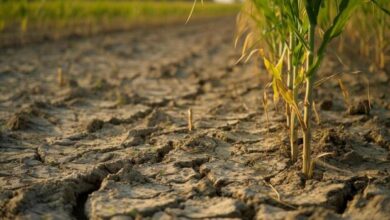
A stone’s throw from the majestic Victoria Falls, a quiet revolution is underway in Nemananga and Mbizha Wards, Jambezi. In this region, the scorching sun and erratic rainfall patterns pose a constant threat to traditional livelihoods. However, residents are adapting with remarkable resilience, turning to goat farming as a strategy to combat the harsh realities of climate change.
George Sibanda, a resident of Silibinda village, exemplifies this shift. With over 30 goats in his herd, he highlights the advantages of these hardy animals. “Goats mature quickly, are economical to maintain, and require less fodder compared to cattle,” Sibanda explains. “This translates to faster returns and a lucrative market in nearby urban areas. I encourage more people to embrace goat farming as a viable and sustainable option.”
Sukukoluhle Dube, a resident of Mbizha Ward, echoes Sibanda’s sentiments. “Boer goats, in particular, have been a game-changer for me,” she says. “They’re a perfect fit for our climate challenges. Small livestock provide quicker returns and are less susceptible to drought compared to larger animals.” Dube reveals that she can fetch an average price of US$100 per goat, with Boer goats commanding a premium.
Support Ncube, a farmer in Matetsi Resettlement, emphasizes the convenience factor associated with goat farming. “Goats are easier to transport to market towns like Hwange and Victoria Falls, where goat meat is a popular delicacy,” he explains. His herd of 58 goats provides not only income but also food security for his family. “Goats are becoming the mainstay for many in our area,” Ncube predicts, “a powerful tool for building resilience and mitigating the impact of climate change.”
Freedom Chabwa, Acting Nemananga Ward Headman, confirmed the widespread adoption of goat farming in a telephone interview recently. “Crop production and cattle rearing have become increasingly risky due to the changing climate,” he acknowledges. “Goats, however, offer a more reliable source of income. Their low feed requirements and quick marketability make them ideal for our circumstances. Those who have embraced goat farming are not only generating income but also ensuring their food security.”
Pride Ncube, a climate change expert and environmentalist, applauds the shift towards small livestock rearing. “The decision to focus on drought-resistant goats in this agro-ecological Region 5 is a commendable one,” he states. “This region is particularly vulnerable to climate change, and goats’ resilience makes them the perfect coping mechanism. I urge others to follow suit to bolster food security in the face of climate challenges.”
Jambezi’s story is one of adaptation and resourcefulness. While some residents, like the Simba Women of Mbizha Ward, have turned to piggery projects, the overarching theme is clear: embracing climate-smart solutions for a more secure future.