Its not COVID19 but deprivation that has resulted in low pass rate; parents, teachers
Tatenda Mkandawire
NKAYI – Parents and teachers in Nkayi have refused to pin the declining pass rate in Nkayi District schools on the Covid-19 pandemic and have instead, placed blame on poor network connectivity, lack of online facilities and general poverty for the dismal Ordinary level results for 2020.
Official statistics of the results showed that the district pass rate stood at a deplorable 11.86% in 2020. This is in keeping with the national pass rate that also dropped from the previous year. Several stakeholders all over the country have attributed the drop in the national pass rate to the Covid-19 induced lockdown that kept schools closed for a protracted period of time.
However, there are shared sentiments among Nkayi parents and teachers that partially exonerate the lockdown regulations concerning the low pass rate. The collective belief is that other factors other than the lockdown regulations that were imposed by the government contributed immensely to the low pass rate.
Residents maintain that Nkayi has a number of unresolved challenges that need urgent attention if there is any hope of a turnaround, chief of them being the poor network connectivity in a number of wards.
Speaking to this publication, a teacher from Komayanga Secondary School, Mr. Shepherd Mutizirwa said, “It is no secret that our world is now highly digitalized, but unfortunately, most of Nkayi outskirts have no stable network coverage, particularly ward 16 which includes Komayanga, Dakamela and Dolahali areas where I work. There is no network at all, no network booster nor mast in sight. Our schools are remote and most of them are technologically disconnected from the world. So without physical contact we definitely cannot expect miracles from a child who did not learn for most of their final year.”
Despite concerted efforts from a combination of eager students and willing teachers, success has proved elusive and remains a pipe dream for most Nkayi learners. Learning content is still inaccessible without internet connectivity or, at the very least, radio lessons that were rolled out by the government last year in mitigation of lockdown effects. Poor radio reception has made it near-impossible for learners to key in to the radio lessons.
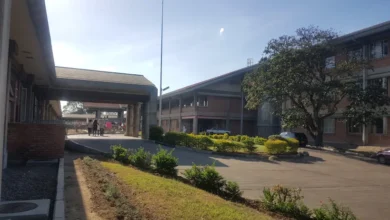
Residents also attributed the decline in the pass rate to lack of resources and proper infrastructure in schools. A social worker from Zinyangeni who requested anonymity weighed in by saying that most schools in the district have no basic 21st century learning materials. She warned that unless the deprivation of schools, which she asserted as the elephant in the room, is addressed, Nkayi will continue to retain poor results.
“Nkayi has only 6 high schools catering for 29 wards and that on its own speaks volumes. Transition to A level is already stunted in the district. Moreover, over 70% of these schools have no laboratories and libraries. Sights of teachers carrying chemicals and apparatus from dilapidated storerooms to classrooms for practicals characterize these schools. Students have no access to reading materials nor space to study.. The environment at schools and in homes is not conducive for meaningful study. We cannot hide behind COVID-19 for failure. We have to fix the real issues affecting our schools.” she said.
Besides lack of resources and poor network conditions, Nkayi is not endowed with much natural resources and this is compounded by a lack of significant industrial activity in the district. The dearth of resources often finds expression in poor school results in this marginalised district of Matabeleland North.