Governance

Youth urged to shun violence

Thembelihle Mhlanga

Zimbabwean youth should refuse to be used as weapons of political violence during the electoral cycle, Lupane residents have said.

Political parties, in breach of the Constitution, have often taken advantage of mostly unemployed youth to carry out violence in exchange for alcohol or cash.

The Constitution of Zimbabwe, Section 67(2)(b) and (c) emphasises that electoral processes should be conducted in a peaceful manner. Sections 155 (a) and (d) further provides for regular peaceful and fair elections which are free from violence and other electoral malpractices

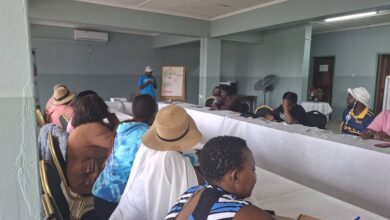
Speaking to Community Podium, Lupane Residents and Ratepayers Association (LURRA) Florence Magagula said it has unfortunately become customary for political parties to to unleash unemployed youths for political violence. 

“Young people need to have something to occupy their minds as that will keep them busy and from unruly activities during the election period,” said Magagula.

She went on to suggest that the youths could benefit from income generating projects as most of them have no sources of income which makes them vulnerable to abuse by political actors.

A Zimbabwe National Statistics Agency (ZIMSTAT) report of 2022 said the national unemployment rate for youth (15-34) years was 27%. Unemployment rate was highest among those who had completed upper secondary at 28% followed by those with lower secondary at 22%.

ZIMSTAT’s definition of employed people includes subsistence farmers and those in the informal sector, such as vendors.

A religious minister, Nobuhle Nyathi of Lupane said  youths should be part of the decision-making processes within their political parties rather reserving them for dirty work such as political violence.

“We have seen political parties having just one slot for youth, instead of allowing the young people to take up meaningful positions. This is a source of frustration for the youths which makes  them susceptible to abuse by political parties’ leadership,” said Nyathi. 

Clause 11 of the Electoral Amendment Bill 2022 added a new paragraph to section 124(1) of the Constitution providing for 10 youth members to be elected to the National Assembly on a party-list system, one from each province.  To qualify for election the “youths” should be aged between 21 and 35, and the party lists have to list male and female candidates alternately.

One young poet who requested anonymity said it is high time the youth should stop being used for in political violence as this in turn will affect their future.

“I urge fellow youths to desist from this habit of being used as inflictors of violence during run up to elections as this will affect their future.  Participating in violence and getting arrested can earn one  a permanent criminal record that would make it difficult to find a job.

“Older leaders are the real perpetrators of political violence and they use the young generation to instill fear in the public. Unfortunately, considering the high rate of unemployment, youths will do whatever it takes to make ends meet , even it means going physical against fellow community members,” said Dennis Ncube a desk officer at Lupane Youths for Development Trust (LUYDT).

 He went on to note that young people were used in widespread violence all over the country around the June 27 2008 presidential re-run. Opposition leader, Morgan Tsvangirai won the first round of the election in March but fell short of the required threshold to be declared president, thereby necessitating a re-run. The Mugabe regime used state agents, youths and war veterans to unleash a reign of terror on Tsvangirai supporters leading to the latter opting out of the re-run.

A study by Obediah Dodo titled Containment Interventions for the Youth Post-Political Violence, which sought to understand political youth violence established that the nature of political youth violence is not predetermined as it is dependent on the level of resistance and psychological influence. It also found out that various effects had been recorded; psychological and physiological. The study established that various containment and reintegration programmes could be rolled out realizing the gravity of the effects and future development.

The National Peace and Reconciliation Commission is mandated by the Constitution to ensure peace, unity, reconciliation and the development of preventative actions to ameliorate conflicts before they occur or to mediate and conciliate in the event that prevention has not been successful. This feeds into the NPRC’s Mission to “Unite Zimbabweans for sustainable peace by developing mechanisms to peacefully resolve violent conflicts of the past and institutionalize approaches for preventing their recurrence in the present and future.” 

Related Articles

Leave a Reply

Your email address will not be published. Required fields are marked *

Back to top button