Long distances expose Binga children to measles.
Fairness Moyana
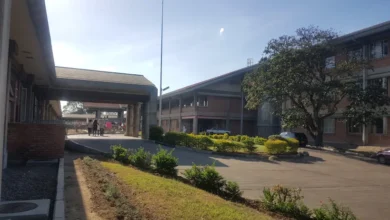
Buumi Nyoni (25) heaves a sigh of relief as she finally arrives at Tinde clinic after a harrowing 5 hour walk, carrying her two children for the Measles vaccination.
Hailing from Lwanzi village under Lubanda ward, 110 km from Binga district hospital, Buumi like many other women have faced serious challenges in accessing health facilities.
“Our nearest clinic is Tinde which is almost 25 km from our village. Due to the long distance, most mothers have failed to get their children vaccinated especially those that bear children every year,” she said.
Since the outbreak of measles which has claimed lives of about 700 children, government has ramped up efforts to have children of between 2 months and 5 years innoculated. The campaign led by the Zimbabwe Expanded Programme of Immunisation is targeting more than 2 million children.
While statistics show that 83 percent of that target number have been vaccinated against measles, children in Binga remain exposed due to various factors such as travelling long distances to the nearest clinic, ignorance on the programme and cultural beliefs amongst others.
Section 76 of the Constitution states that every citizen has a right to access basic health care services however, for the Binga folk it’s a different story. The most populous district in Matebeleland North province according to Zimstat which has a long history of marginalisation has few clinics with the available ones being several kilometres away or facing basic medication and or personnel shortage.
Global standards recommend the travelling distance to the nearest health facility to be at least 5 km but this is not the case with Binga people who endure distances of up to 30 km.
The latest Zimbabwe Vulnerability Assessment Committee report (Zimvac) found that 12 percent of rural households in the country still travel more than 10 km to the nearest health institution. Matebeleland North province bears the highest number at 18 percent of people who travelled more than 10 km to the nearest health centre.
According to one traditional healer from Saba people resort to using traditional remedies to counter the challenge.
“Every illness has a traditional method of healing so most people from here resort to herbs. There’s nothing amiss about that as we have relied from time immemorial on our own cultural and traditional beliefs to get rid of certain illnesses including this measles. We have coped without the vaccinations, all my children never got injected but they grew up just fine.”
Women are also at the forefront of accessing health services and the shortage of health centres in the district affects them more than men as they walk long distances to access the scarce facilities with children strapped on their backs.
“Due to the long walking distances children left in the care of grandmothers especially of old age often skip these vaccination programmes,” said Regina Mugande.
While government has been trying to construct and rehabilitate health institutions, Binga continues to lag behind.
Investigations by Community Podium revealed that several wards under Binga Rural District Council (BRDC) such as Siachilaba, Lubu, Lubanda, Chinonge and Pashu do not have clinics.
BRDC chief executive officer, Joshua Muzamba bemoaned the poor state of the health delivery system arguing that they were bridging the gap by constructing more clinics using devolution funds.
“We are in the process of constructing clinics using the devolution funds in Malaliya under Pashu ward, Zambezi, Chinonge and Siansundu. We realise that our people fail to access health care due to walking long distances to clinics. We continue to mobilise resources to help in supporting our health institutions through various partnerships with development stakeholders,” he said.
The development has also seen some villagers resorting to crossing the Zambezi river in canoes to access healthcare services in neighbouring Zambia risking drowning and crocodile attacks.
Binga District Medical Officer, Dr Sibonginkosi Ncube acknowledged that there are hurdles in reaching some areas but was quick to say outreach programmes were being rolled out.
With the polio vaccination programme underway, the people of Binga can only hope that they will not be left behind.