Children in marginalised areas face difficulty to access education
By Calvin Manika
The COVID 19 pandemic forced the early closure of schools as a way to prevent the spread of the deadly novel corona virus. However, learners in marginalised areas face insurmountable challenges in accessing e-learning, the supposed alternative.
As of March 16 2020, 777 million children and students have been forced out of schools and universities in a total of 100 countries, with 85 governments closing schools nationwide and 15 others imposing localized school closures, according to UNESCO. A large majority of those 670 million are between pre-school age and 18 years old. By 9 April Human Rights Watch reported that more than 1, 5 billion children have been out of school. This situation has continued in 2021.
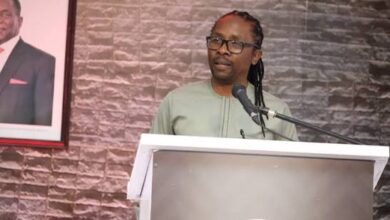
Mr Tendai Nyagura, a lawyer with a vast knowledge on children rights said; “E-learning is a good thing considering the time we are in and it should be taken seriously. The government must ensure that every child has access to the internet. Thanks to UNICEF for the initiative to provide internet of good things, children can actually enjoy free access on Google by going through their website.”
The pandemic has exposed social disparities in communities, the haves and have-nots. It is a staggering number, and with many other countries having adopted the same stance, there is a profound impact on families, communities, and learning everywhere. And while interim distance and remote learning programs have been put in place by some schools, the most marginalized, poverty-stricken, and vulnerable children will be at the greatest disadvantage.
There is a notable concern on the impact of online learning to children in marginalised areas. Section 19(2) (d) of the Constitution of Zimbabwe spell out that, the state must adopt reasonable policies and measures, within the limits of the resources available to it, to ensure that children have access to appropriate education and training.
COVID-19, is amplifying the struggles that children are already facing to receive a quality education. Global Business Coalition for Education, an organisation founded by Their world pointed that even before the outbreak of the virus, there were 258 million out-of-school children across the globe principally due to poverty, poor governance, or living in or having fled an emergency or conflict. Schools have been closed countrywide indefinitely.
However, advocates for equal education opportunities feel that, there is need to ensure disparities between public and private schools in access to education are minimised through introducing innovative teaching models. UNESCO recently published a list of platforms and programs for online learning that may be useful to schools. If distance learning is long term, careful attention should be placed on the language of instruction, content progression, and relevance for students. Continuing to pay teachers and staff during school closures is also important. This not only allows for economic stability during the crisis, but it also avoids having them seek other employment and leave the profession.
“It seems premature to open our institutions of learning due to the transportation logistics, overcrowding in classes, and difficulty of maintaining social distancing in class, playgrounds and at break times. The hint by the government to open schools in a phase by phase scheme at the appropriate time taking the health of children into account is plausible. Currently deferring opening of schools seems to be the way to go.” Said Mrs Sibanda of Ingagula, Hwange.
Constitution of Zimbabwe Section 81 (2) as read with 19 (1) clearly states that in matters relating to children, the best interests of the children concerned are paramount. By the time of opening schools, the authorities must ensure that standard protective measures are put in place also in rural and marginalised communities.
Mr Nyagura added that; “The situation is tough in rural areas. The government should put in place internet booths in rural areas which will be monitored so that children are not exposed to the pandemic.”
Most parents cannot sustain online learning, disadvantaging most pupils in urban and more so in rural areas. Advocating for this matter Justice for Children, an organisation of lawyers dealing with children implored the government to come up with inclusive strategies. Strategies which include assigning reading and practical exercises for home study; radio, podcast or television broadcasts of academic content; assigning teachers to conduct remote daily or weekly follow up with pupils using social media. Videos and audios can be recorded to satisfy syllabus requirements as well as address individual learners’ requests.
In mitigating the challenges, the government through the Ministry of Information and Publicity introduced radio lessons to close the teacher-pupil gap. Speaking to this publication, Mandla Ndlovu of Matetsi ward 1 in Jambezi said, “If Covid 19 is going to be with us for a longer period, the government must sit around the table again and come up with an approach that makes sure no child is excluded from receiving education during this pandemic period.”