Young voices take on mental health stigma in community dialogue
By Nobukhosi Ndlovu
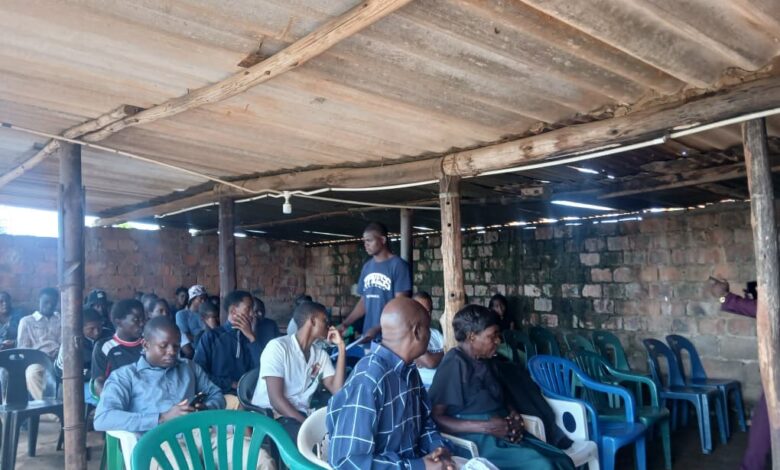
A group of young people called Destiny Changers, under the Tree of life organization, hosted a community engagement session yesterday in Nketa 9 at Faint in Action church with the aim to address the common stereotypes about physical and mental health.
As misconceptions surrounding mental health continue to persist in many communities, Destiny Changers, made up of young people from different parts of the city led the workshop, with the intention to change that narrative.
Mthandazo, the Event Coordinator shared briefly about the growing need to raise awareness about mental health in their communities.
“Our aim is to improve young people’s lives, ” Mthandazo said, ” we try to analyze how current circumstances are affecting us as young people so that we can address them,” he added.
During the session, the participants, engaged in a discussion that sought to define mental health, allowing them to share their understanding of the topic, thus providing a reflection of common perceptions held in the community.
“Mental health is not having stress or any mental health issues,” said Munyaradzi, one of the participants in the workshop.
Another participant named Lucy, added that mental health is often associated with conditions such as trauma and anxiety.
The session then created an opportunity to add on these perspectives and analyze the concept of mental health in greater depth.
Dr Siziba, a psychologist from World Mental Resilience Programs, as the guest speaker of the engagement explained the difference between physical and mental health, listing the many conditions that fall under each category. He challenged widely held beliefs that reduce mental health to depression alone or define it by its presence or absence.
“When I talk about mental health, I am not just referring to depression, nor am I talking about the presence or absence of it,” he said.
Using an example, he explained that feeling sad does not necessarily mean someone is depressed. “If a mosquito bites you, it does not mean you now have malaria,” he said, emphasizing that individuals should monitor their emotional state over a period of at least two weeks before drawing conclusions
“We are happy to see that people are starting to acknowledge and prioritize mental health,” Dr Siziba added, commenting on the norm whereby people think of psychosis when mental illness is mentioned which makes it one of the most misunderstood mental health conditions.
“Anything and anyone can cause depression.” Dr Siziba pointed out, highlighting how everyday environments such as relationships, homes, churches and workplaces can sometimes contribute to mental health challenges, emphasizing the need for awareness and supportive spaces.
The engagement also included brief remarks from the host church’s head pastor, Baba Ndlovu who spoke on the role of faith in navigating life’s challenges.
Established in 2025, Destiny Changers aims to reach at least 300 young people by 2026, with the coordinator noting that while engaging youths on mental health can be challenging, the group uses different types of tactics to meet young people where they are, encourage participation and create space for dialogue.
Community Podium is the recipient of the 2025 Outstanding NGO Reporting Award. This reflects our dedication to amplifying community voices and advancing public-interest journalism.