Bulawayo residents turn plastic waste into income
By Kelvin Kutinyo
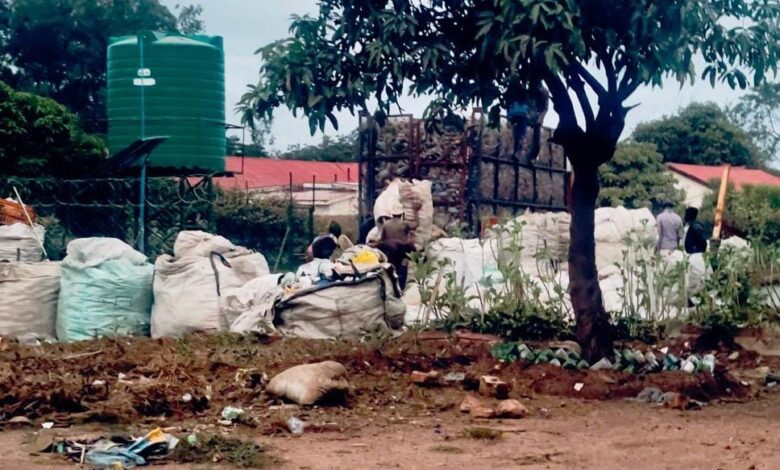
Residents in Bulawayo are increasingly turning to collecting plastic bottles for recycling as a source of income, with many describing the activity as a game changer in their efforts to make ends meet.
Families are collecting empty plastic bottles from various beverages, including mineral water, Pepsi, Mirinda, and 7Up, accumulating them until a vehicle can transport the bulk to a recycling company.
Mrs Vela Siamulela, a resident of Kusile flats in Makokoba, also known as ‘Ematongeni’, has attributed the success of their plastic collection efforts to women’s unity. She added that agents collect the materials weekly, encouraging continued participation in the initiative.
“We agreed as women from our flats that if we work together, we can actually make a big income than working alone to collect the plastic material. So we collect every day and then put it one side of the flat. Whenever the truck comes to collect our plastic material it leaves here fully loaded, unfortunately I will not mention the actual profit.”
“This has been a good thing for us because we are able to look after our families, yes we have other jobs that we do but this one also helps with certain expenses like cash power electricity and daily needs,” said Mrs Siamulela.
The bottles are typically collected from areas with high foot traffic, such as event venues, taxi ranks, stadiums, and nearby shopping centers.
One of the plastic material collectors Junior Moyo stated that plastic material is collected by agents once they’ve reached a specific target, which yields a substantial payout based on weight. Since individuals do not have contact with companies, agents often come to collect and buy the waste which they then sale to big companies.
“What we mainly do is, we go around picking up shumba maheu bottles, jik bottles and other plastic bottles that can be used for recycling and they cost 20cents per kg so we normally collect up to a tonne to atleast have about 20-30usd per sale.”
“The company agents who are closer to us come to our homes once we feel like we have collected a lot of plastic bottle then they ferry them to Harare especially for Pepsi local here in Bulawayo companies like Monarch also take plastic buckets,” said Junior Moyo.
The collection period for filling at least four large bags typically spans two weeks, with seasonal fluctuations impacting business volume. Winter months tend to be slower, while summer sees increased collection due to higher usage and events.
He noted that despite appearing straightforward, the job presents various challenges that serve as obstacles to overcome.
“So sometimes we come across problems such as a hostile reception in some areas like near the ngozi mine, and then walking distance when picking plastic material can increase while you don’t see it and then you realise that, you are now carrying a big heavy bag with no transport money.”
“If you leave the bag someone can easily take it, and in most cases you are asked to pay an extra fare by kombi drivers for boarding their taxi with a bag covering another seat,” he added.
While some people might discard empty plastic bottles or broken plastic items as worthless, others see them as a viable source of income, illustrating the concept that one person’s trash can be another’s treasure.
Community Podium is the recipient of the 2025 Outstanding NGO Reporting Award. This reflects our dedication to amplifying community voices and advancing public-interest journalism.