Matobo youth rewrite rural farming story through poultry production
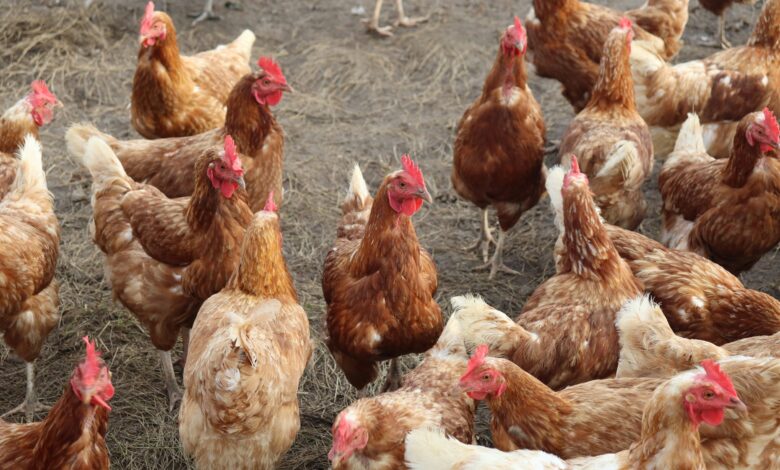
Image Source: Unsplash (Online)
Young people in Matobo District are reshaping the image of rural agriculture by turning to poultry farming, particularly broilers, Sasso chickens, and layers as a sustainable source of income and empowerment.
Once viewed as a small-scale subsistence activity, poultry production is now emerging as a key livelihood option for many young people in rural Matobo, who are using it to pay school fees, cover household expenses, and reinvest in their farms.
According to recent data released by the Zimbabwe National Statistics Agency (ZimStat), the country’s unemployment rate stands at 21.8 percent among individuals aged 15 years and above, based on findings from the 2024 third-quarter Labour Force Survey. This statistic underscores the ongoing shortage of formal employment opportunities, with many citizens relying heavily on informal work to sustain their livelihoods.
Compounding the challenge is Zimbabwe’s overall poverty headcount, which was last recorded at 57 percent in 2019. This means more than half the population lives below the poverty line, pointing to persistent socio-economic vulnerabilities and growing inequality.
In rural areas, agriculture remains the backbone of youth employment, with ZimStat noting that over 60 percent of rural youth depend on farming-related activities for survival. Of particular significance is the role of small livestock production, such as poultry farming, which has emerged as a critical contributor to household food security and income, especially in semi-arid regions like Matobo.
For Sasha Ndebele, a young farmer from Ward 9, poultry production has transformed her family’s economic situation.
“Yes, we survive through poultry production. It’s how we manage to pay school fees for our children and take care of our families,” she said.
Although she focuses mainly on broilers, Ndebele said both broilers and Sasso chickens have proven valuable for small-scale farmers.
“I didn’t have many Sassos, but I’m more into broilers. Still, I make a living from this. It has really been helpful,” she explained.
Ndebele noted that Sasso chickens are particularly advantageous for farmers who grow small grains.
“It’s an advantage, especially for some of us who grow millet and sorghum. We use those crops to feed the Sassos, which cuts costs. Even sunflower comes in handy for feeding,” she said, adding that continued support for small poultry farmers was key to strengthening rural economies.
“These initiatives are not just about food security. They are about empowering communities economically,” she added.
Another Matobo youth, Nkosilathi Ncube, shared how poultry production became his pathway to survival and growth despite challenges.
“Poultry production isn’t easy, but it’s possible to survive and even grow if you’re disciplined and strategic,” said Ncube, who started his enterprise with as few as 20 birds.
He explained that beginning with a manageable number allowed him to learn through experience without suffering large losses.
“I started small because I knew I had to learn first. Even with 20 birds, I could make mistakes, understand my costs, and build experience without risking too much,” he said.
Ncube recalled early setbacks losing chicks and mismanaging feed, but said each mistake became a stepping stone to improvement.
“You can read books, but the best teacher in poultry production is experience,” he said.
As production costs rose, Ncube turned to locally available feed alternatives such as maize bran, sunflower cake, and greens to reduce expenses.He also emphasized the importance of collaboration and networking.
“I made it a point to connect with other farmers, agricultural extension officers, and community groups. Sharing knowledge helped me improve my methods and avoid repeating mistakes,” Ncube said.
His marketing strategy focused on community-based sales supplying neighbors, schools, and local shops. He sometimes offered home deliveries or discounts to retain loyal customers, ensuring a steady market even when demand fluctuated.To stay afloat during periods of low egg prices, Ncube diversified his business.
“When egg sales were low, I sold chicken manure to crop farmers and chicks to other small-scale producers. Every income stream, no matter how small, made a difference,” he said.
When asked whether he would encourage educated young people to seek formal jobs or start farming, Ncube said the decision depends on one’s circumstances.
“If jobs are hard to find but you’re determined, start small right away,” he advised. “Don’t wait for perfect conditions. Use what you have build a simple fowl run, buy a few indigenous breeds, and grow step by step.”
He stressed that poultry farming requires commitment and patience. “You need to treat it like any other profession plan, record, and learn. Once it stabilizes, poultry farming can sustain you, sometimes even better than a job,” Ncube said.
As Matobo’s youth continue to invest in poultry, local agricultural officers note that such initiatives are key to reviving rural economies and reducing unemployment, which is proof that with innovation and persistence, young farmers are redefining what it means to succeed in rural areas.