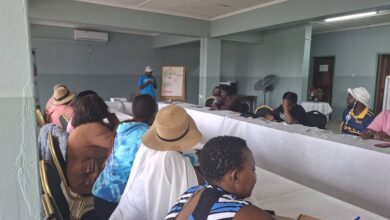
Informal traders urged to develop business plans and leverage technology

Bakani Ncube, Projects Officer, Bulawayo Vendors and Traders Association (BVTA)
By Providence Moyo
Informal traders have been encouraged to develop comprehensive business plans and leverage technology to sustain and grow their businesses.
Bakani Ncube, a Development Practitioner and Projects Officer for the Bulawayo Vendors and Traders Association (BVTA) emphasized this need during a virtual discussion hosted by Community Podium last Thursday.
Ncube noted that informal traders play a significant role in Zimbabwe’s economy, yet they often face challenges in accessing financial services and markets.
“To informal traders seeking to make their businesses sustainable, I advise you to develop a business plan, diversify your products, invest in financial literacy, leverage technology, build strategic partnerships, focus on quality and customer service, and stay adaptable and resilient,” she said.
Ncube also highlighted that one of the major successes of their member informal traders can be attributed to the adoption of Internal Savings and Lending Schemes (ISALS) amongst informal traders in Bulawayo. ISALS have been appreciated for their ability to ensure that informal traders have access to savings and loans.
“ISALS have transformed the financial landscape for many of our members, offering a safe and reliable means to save and access credit,” Ncube stated. She also emphasized that the organization has advised members of ISALS groups to create a legally binding constitution to govern their interactions and safeguard against potential scams.
ISALS have positively impacted the financial literacy of participating informal traders through Peer-to-peer learning where group members learn from each other’s experiences, sharing best practices and advice on financial management. They have also Improved financial and business decision-making demonstrated by how some of the groups’ businesses have undergone registration.
BVTA hopes to continue developing ISALS, exploring opportunities to scale up the initiative, integrate technology, and foster linkages with formal financial institutions. “Our goal is to empower informal traders to grow their businesses, improve their livelihoods, and contribute to the development of Zimbabwe’s economy,” Ncube said.
According to various reports from the Zimbabwe National Statistics Agency (ZIMSTAT), and international organizations like the World Bank and the International Labour Organization, it is estimated that the informal sector accounts for around 60 to 70% of total employment in the country, making the discussion relevant as it addresses various information needs of informal traders.