ILRI, EU, Zim govt unveil state-of-the-art vet lab in Gwanda
Providence Moyo
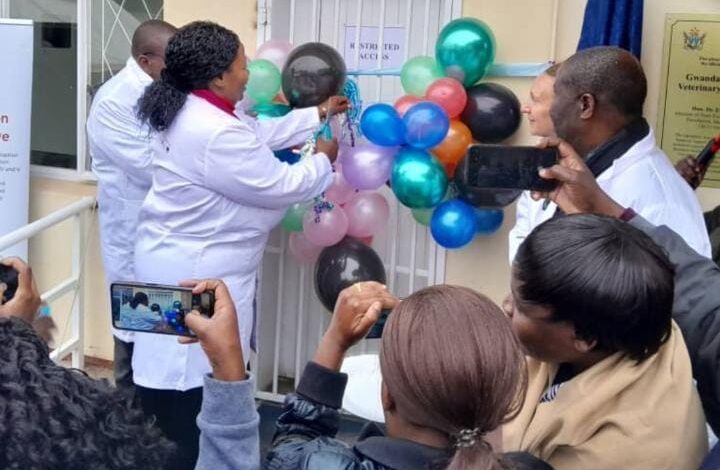
The International Livestock Research Institute (ILRI) in partnership with the government of Zimbabwe and the European Union launched a Provincial Veterinary Laboratory in Gwanda on Tuesday.
The laboratory, which was refurbished by the Livestock Production Systems in Zimbabwe (LIPS-ZIM) project through financial support from the European Union Delegation to Zimbabwe, will enhance the provision of veterinary services and surveillance of notifiable diseases through early detection and effective control of the frequent disease outbreaks.
In a speech read on her behalf by Matabeleland South Secretary for Provincial Affairs and Devolution, Minister of State for Matabeleland South Provincial Affairs and Devolution, Dr Evelyn Ndlovu, said the refurbished veterinary facility is a crucial step towards productive trade and animal welfare which will improve livelihoods for farmers in the province.
“Not only are laboratories important with regard to trade but they also inform animal health personnel on the external cause of disease. This leads to correct diagnosis and appropriate advice given to framers with regards to treatment. I have no doubt that this will help improve the quality of our animals and improve disease detention surveillance control to research in Matabeleland South in particular and Zimbabwe at large, hence it will be critical in fighting against animal and zoonotic diseases that currently bedevil our country, province and district and those that can emerge, now and in the future. “
Dr Ndlovu urged farmers to utilise the structure for both their personal and their livestock’s benefits.
Speaking during the same event, LIPS-ZIM project coordinator Sikhalazo Dube said the aim of the project is to improve food security in the country through saving livestock which is a backbone of many households in Zimbabwe.
” Livestock Production contributes significantly to the food, wealth, drought power, and social well- being of many rural households in Zimbabwe with an estimate of 90 % of the national cattle herd, 98% of the goat flock, 90 of the sheep flock, and 80% pig herd owned by smallholder farmers, hence we are pleased to work in Gwanda and we are putting our shoulders to the wheel to get services underway for the people who need them”.
EU delegation to Zimbabwe Representative Ms Sara Piccoli commended the joint efforts by the government and its research partners to improve livestock production through evidence-based approaches.
Ms Piccoli said the EU is committed to working with the government in the improvement of agriculture particularly livestock production.
“This laboratory is one of those proposed ways. But the project also piloted a fascinating new cattle and goat foot bath technology in Chiredzi District in November 2022, which aims to reduce cattle mortalities caused by ticks and tick-borne diseases.
“The successful veterinary laboratory launch ceremony today is a great demonstration of what good partnerships and strong collaborations can do. We look forward to witnessing the impact that this laboratory will have on the livestock farmers in the community and more importantly – in the future, when the components of sustainability integrated into this project will come in to full effect once the project has come to an end”, said Ms Piccoli.
Over the years, Matabeleland South has counted the loses over recurring diseases such as foot and mouth, blackleg, anthrax and tick borne diseases and January disease.