PWDs in Zim’s rural communities facing challenges in accessing Covid 19 vaccines information
Sheron Mirriam Tazvivinga
Located 276 km from Harare ,Silobela is a drought prone area which lies in the Midlands province of Zimbabwe. It is one of the marginalised rural communities where villagers wallow in abject poverty.
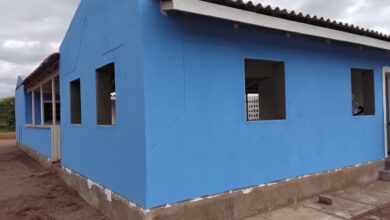
The dirty gravel road leading to Silobela shows that it is a community far away from civilization. No meaningful development has visited this part of the country since 1980 . As a result the community struggles to access medical services.
The villagers have also suffered three consecutive years of poor harvests owing to a combination of poor rainfalls and lack of farming inputs.
The Covid 19 pandemic has only deepened their existing woes.
People with disabilities are the most affected as they have been largely neglected by the government during the pandemic.
67 year old Phiri whose hands and legs are not functional said that he is not able to access the health facilities as there is no one to assist him.
” I need someone to help me push my wheelchair to the clinic so that I can get vaccinated. I cannot push my wheelchair to the hospital because it is too far. I need assistance to get there,” he said.
The nearest health facility is 15km from most of the homesteads. This makes it difficult for people who use wheelchairs to travel to the health centres and get vaccinated.
Silobela is connected to Kwekwe town by a narrow strip road which was used during the colonial era to service white commercial farmers. Because of the bad state of roads, transport to get to Kwekwe town is very expensive which compounds the challenge for PWDs in their bid to travel to hospitals in Kwekwe for medical attention.
Non-governmental organizations(NGOs) rarely visit the village to educate the villagers on Covid 19 vaccines due to the poor road networks.
32 year old Naomi Bvudzijena who is visually impaired said, ” We only know that people are being vaccinated but we do not know how the vaccine works. We need someone to teach us about the vaccine and how it works,” she said.
With the help of his wife, 45 year old Ndlovu who is also deaf added that they had no one who could interpret vaccine information to them.
“There are no sign language interpreters to educate us about the vaccine at the health centres,” he said.
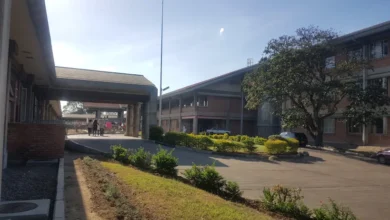
Most of the villagers rely on Kwekwe General Hospital located 60km from Silobela. Despite it being a public hospital, it does not accommodate the deaf and visually impaired community as there are no sign language and brail interpreters. This has seen deaf and visually impaired people being turned away without receiving treatment.
A health worker who spoke anonymously said, “We do not have sign language or brail interpreters, as a result we are forced to turn our patients away because we can’t help them,” he said.
Bvudzijena and Phiri’s challenges are part of a broader challenge being faced by persons with disabilities in rural communities in the southern African nation. Persons with disabilities have always been excluded in most of the health services. This has worsened during the vaccine rollout programs as they are sidelined.
For the visually impaired and deaf people, accessing information has been a challenge which has seen them failing to make informed decisions on the Covid 19 vaccines.
According to the UN Brief : A disability inclusive response to Covid 19 (2020) the global impact of Covid 19 is worsening the pre- existing inequalities,exposing the extent of exclusion and highlighting the need to formulate disability inclusion.
60 % of the deaths in the UK were among people with disabilities – a mortality rate twice the general population.
In Zimbabwe there has been no sustained plan to distribute medical supplies to the homes of people with disability.
While they are no statistics about the infections among the 1.4million disabled people in Zimbabwe, activists say that PWDs continue to suffer as they cannot access the health centres to receive adequate information.
Harare based Human rights advocate Samantha Sibanda said, “… the vaccine rollout program was not inclusive although it is said to be for everyone. It is indirectly discriminatory. There is no adequate information on the vaccines for persons with disabilities to access. As a result they cannot make informed decisions as their judgement of the vaccine is based on the information they receive from people around them.
With a lot of skepticism around the Chinese invented Covid 19 Sinopharm and Sinovac vaccines , people with disabilities doubt the efficacy of vaccines,” said Sibanda.
Lack of disability inclusive response measures means that many persons with disability are left without access to vital health information. This becomes a violation to their fundamental right to access health services.
The Senator representing PWDs in Zimbabwe, Watson Khupe said efforts to engage with the government to ensure that health facilities were accessible to PWDs in rural areas were fruitless.
” We tried to lobby the government to increase health facilities in rural areas so that people with disabilities won’t have to travel long distances to reach vaccination points. However this was to no avail,” he said.
Harare based Disability Rights Advocate Odilo Linzi added that they did not receive any feedback from the government after they sent an application to the Ministry of Health advocating for disability inclusion policies.
” We sent an application to the Ministry of Health but they never responded nor acknowledged our application,” he said.
The Ministry of Health Director for Human Resources Edson Mudenda said that the government had in 2016 introduced a plan to equip the health workers with sign language and braile interpretation skills. However due Covid 19 these plans were halted he said.
” In 2016 we introduced a platform for our health workers for them to acquire sign language skills. The plan was meant for all hospitals in the country, however, due to Covid 19 some of the hospitals were left out,” said Mudenda.
The story in rural Silobela is that of people forgotten by their own government. It is not known when their plight will end as they continue to be excluded in accessing essential services.