70 hectares of wheat destroyed by hailstorm in Gwanda North
By Jonah B Moyo
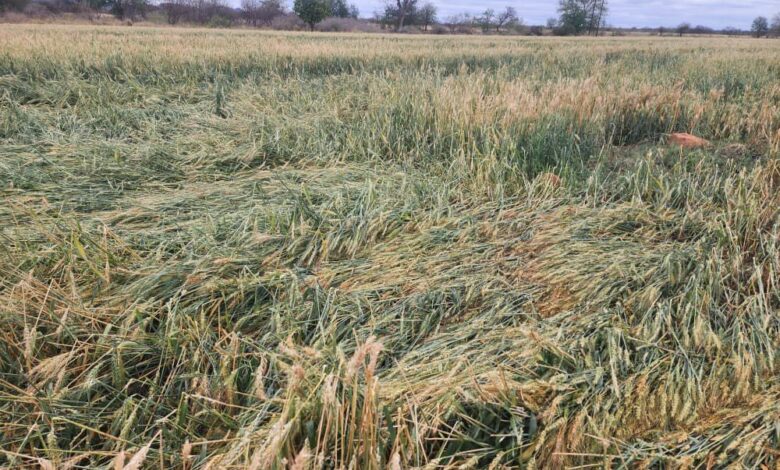
A devastating hailstorm struck the Tuli Makwe Irrigation Scheme in Gwanda North this week, destroying over 70 hectares of winter wheat and dashing the hopes of local farmers who were anticipating a bountiful harvest.
The hailstorm struck on Tuesday, bringing strong winds and heavy rainfall that left farmers reeling after a long wait for their wheat to reach harvest time. In under 50 minutes, it had destroyed homes within the farm and ravaged crops, its powerful winds leaving a trail of devastation.
Farmers who were anticipating a bountiful harvest of around 360 tonnes of wheat now face a harsh reality, expecting to produce less than half of that due to the recent hailstorm. This devastating loss will also impact Matabeleland South Province’s projected wheat output, which was expected to reach 21,000 metric tonnes from 3,648 hectares this season.
For many farmers, selling fresh produce and harvested crops is a lifeline. They get to earn a living and support their families, including paying school fees for their children. But the recent storm has left them feeling hopeless, destroying their crops and wiping out their primary source of income.
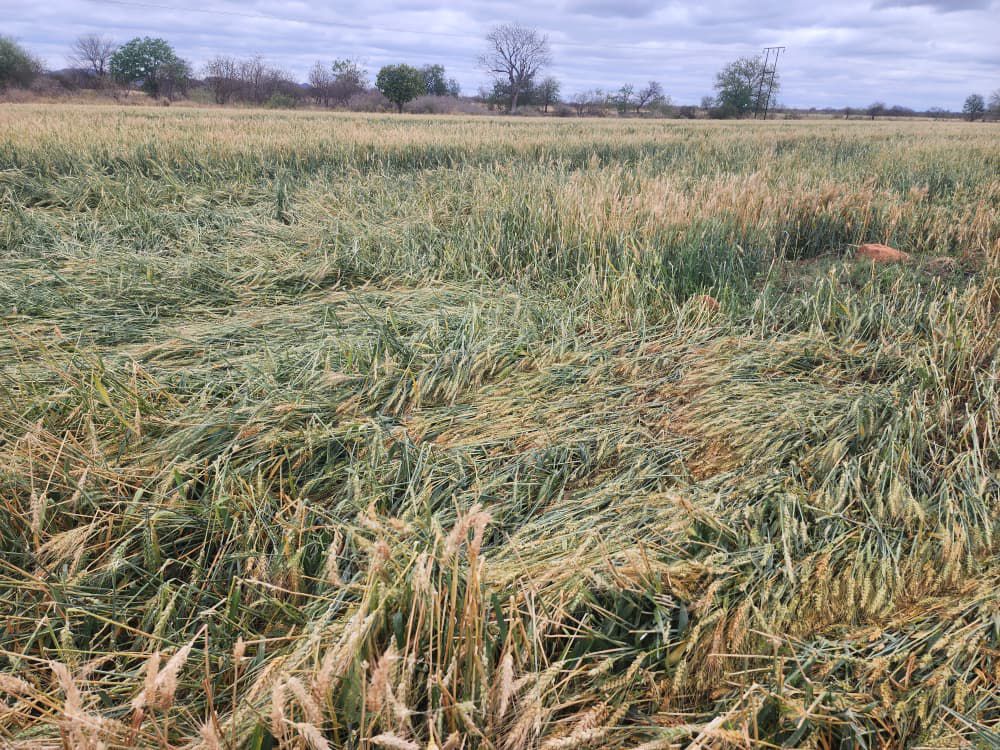
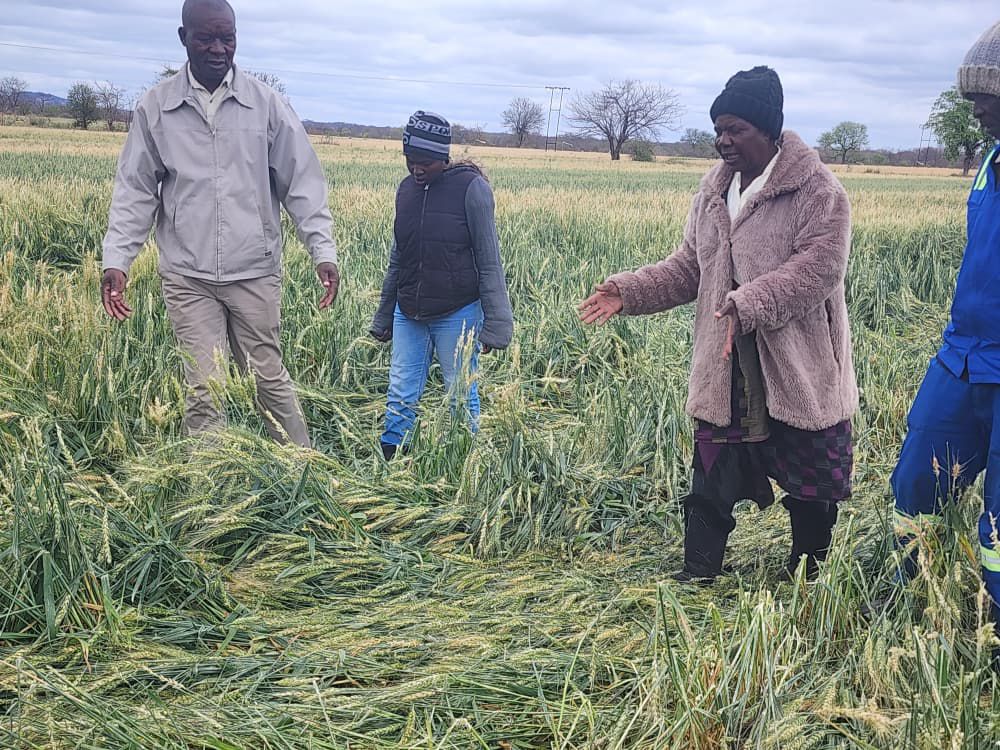
Rebecca Khabo, a farmer at Tuli Makwe Irrigation Scheme, lamented that the storm crushed their hopes, leaving them with nothing but devastation.
“We were anticipating a bountiful wheat harvest, but the storm dashed our hopes, destroying our crops and homes that supported our irrigation systems. If the trend continued, we would have been left with nothing but barren land.
“As rural farmers, our livelihoods depend on farming, and with our crops destroyed, we are facing a crisis. We do not know where we will get the money to pay school fees and cover other daily expenses,” she said.
Tuli Makwe irrigation scheme chairperson Loiuse Ncube said they are in pain as farmers.
“As farmers, we are in deep distress. We were counting on a good harvest to give our children a better life, but the storm has taken everything away from us. We were ready to harvest, with fuel for the machines already in place, but now all our hopes are shattered.
“The storm was merciless, destroying everything in its path – our maize, wheat, and other crops. Nothing was left standing. The impact is far-reaching, affecting many lives that depend on the irrigation scheme,” Ncube said.
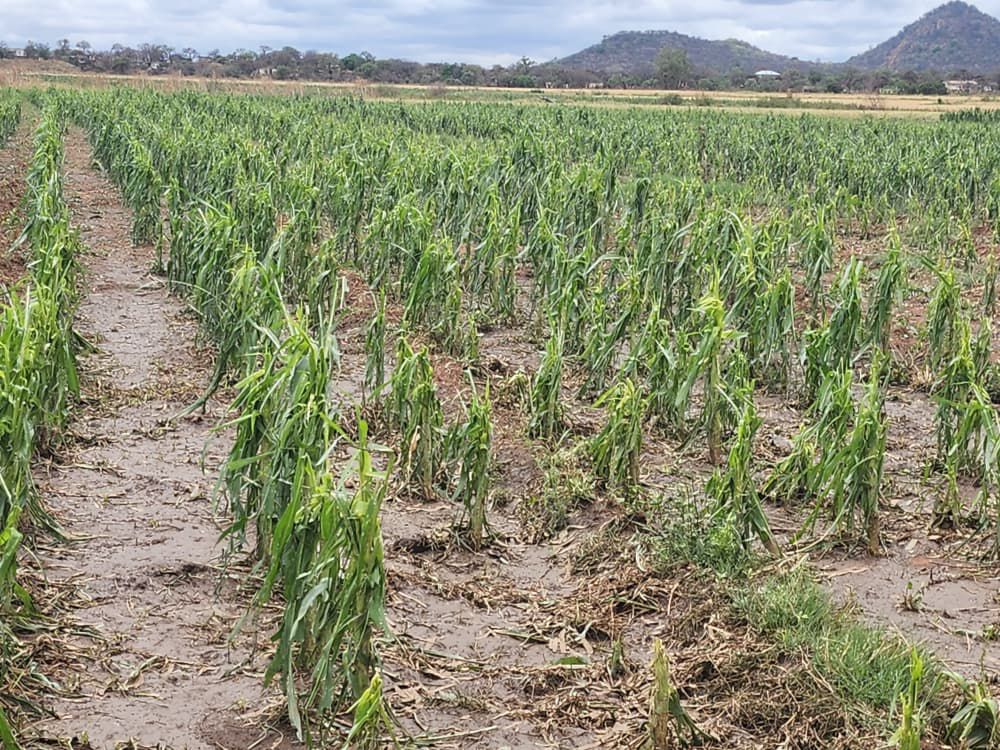
“We are in financial squeeze with pending bills for electricity, water, diesel, and Agribank loans that still need to be settled. Now, with the fields severely damaged, we are uncertain about the harvest and how we will manage to pay these debts,” he added.
Agricultural and Rural Development Advisory Services’ Matabeleland South provincial deputy director, Bhekilizwe Ncube, said the hailstorm was not just a loss for individual farmers but a major setback for the province.
“What happened at Tuli Makwe irrigation is a disaster and as the province we are in disbelief of what happened. As the province we have ploughed 3600 hectares of wheat and the hailstorm have also reduced. Farmers may harvest less than half of what they expected. Considering that the scheme is in Regions 4 and 5, the performance of the crop before the storm was commendable. This incident should serve as a lesson within the agriculture sector on the importance of insuring crops, livestock and other assets,” he said.
“Given the unpredictability of storms and their impact on crops, it is crucial for farmers to consider insuring their crops. This way, in the event of unforeseen incidents like this, they can receive financial support from the insurance company to help mitigate losses,” Ncube added.
Wheat production has emerged as a cornerstone of Zimbabwe’s agricultural economy, ranking as the second most important cereal after maize. It plays a crucial role in the country’s food security strategy while driving agro-industrial growth.