Centralisation of power blamed for BCC staffing woes
Providence Moyo
Bulawayo City councillors have bemoaned the lack of meaningful devolution power that has a led to under-staffing, among other challenges in the local authorities, a policy brief organised by a research and advocacy organisation has revealed.
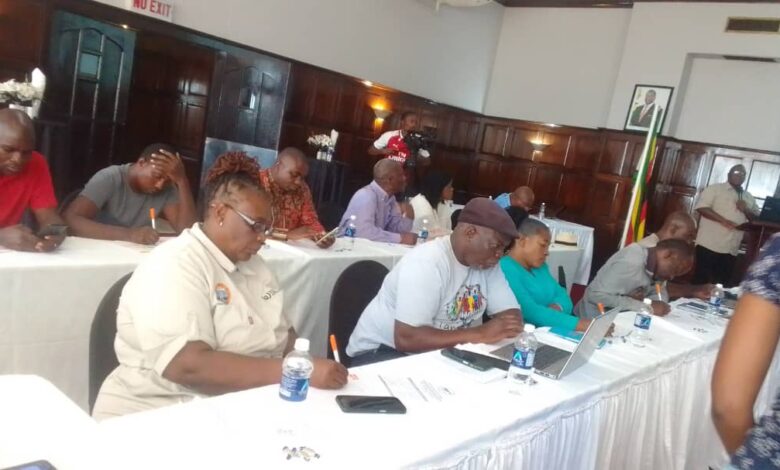
The meeting held in Bulawayo was coordinated by Public Policy and Research Institute ( PPRIZ ) under the theme, ‘The Post Electoral Political and Economic Landscape In Zimbabwe: Implications on Service Delivery.’
Councillors, academics and civil society organisations’ menbers were in attendance.
The two councillors present said the status quo-a lack of proper devolution has hamstrung and effectively prevented the local authority from employing more staff to improve service delivery in the city.
Ward 3 councillor Mxolisi Mahlangu revealed that the local authority’s efforts to to recruit more staff to keep up with service delivery demands have been frustrated by centralisatiion of power by central government which maintains a stranglehold on council affairs including staff recruitment. He cited that on two occasions, batches of potential recruits were sent to central government for approval as per protocol but central government did not respond, let alone accede to the request.
“We have a serious collapse of service delivery in the city but one of our major challenges is that we are understaffed by at least 1 450 employees. We have been making frantic efforts to ameliorate this situation to no avail. Three months ago, we sent a batch with 400 names of potential staff for central government’s approval and last month we sent another batch of 500 but have still not received the nod to proceed from central government. We have not received a response. We are at disequilibrium with central government because we cannot even independently employ general hand workers including street cleaners.”
Ward 23 councillor, Ntombizodwa Khumalo concurred with Mahlangu and further decried the lack of autonomy due to half-hearted devolution of power.
Cllr Mahlangu added that the local authority received a message on Monday to the effect that the Bulawayo City Council (BCC)’s budget proposal has not been approved by central government on the basis of rejection by a Harare-based official who is probably out of touch with issues in Bulawayo.
“This morning we were informed that our budget proposal was not successful because it was contested by one individual in Harare. We are not sure if that individual is a person from Bulawayo who relocated to Harare or it is just somebody who just decided to reject the budget. The decision maker probably is disconnected from Bulawayo’s challenges,” she said.
Cllr Mahlangu highlighted that 90% of the local authority’s infrastructure is in a dilapidated state and he also expressed concerns on brain drain through relocations and resignations perpetuated by poor remuneration which continues to derail service delivery.
Section 264 in sub-section I of the Constitution states that “whenever appropriate, governmental powers and responsibilities must be devolved to provincial and metropolitan councils and local authorities to carry out these responsibilities efficiently and effectively.”
PPRIZ is an independent non- profit research and advocacy organisation dedicated to promoting citizen participation and inclusive development in Zimbabwe.