Jambezi residents concerned amid USAID funding cuts
By Victor Sibanda
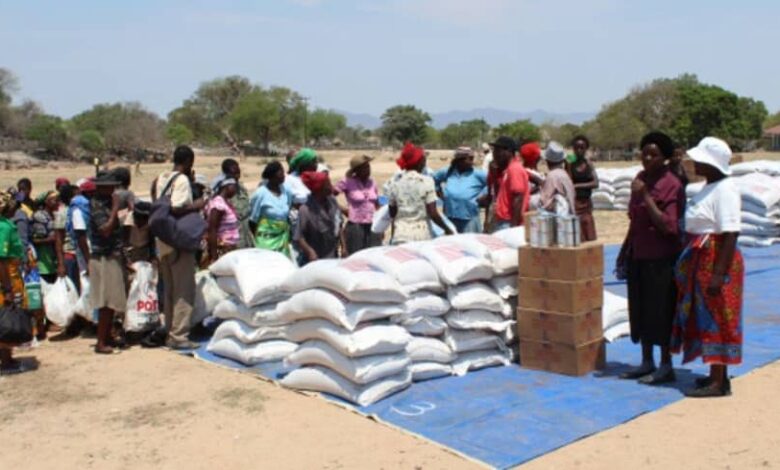
Jambezi Residents in Victoria Falls are facing an uncertain future as foreign funding and food handouts which they had been receiving from USAID and US sponsored organisations are seemingly drying up.
Early this year, the United States of America announced plans to reduce foreign aid funding, affecting various programs worldwide. Donors such as USAID have provided vital support to the community, including food and monetary handouts. However, with the funding uncertainty, many residents are uncertain with how they will get by.
“I had been receiving food assistance through USAID, but now I have to rely on farming full-time,” said Thabani Ncube, a resident of Nemananga Ward. “The problem is, farming is not profitable here due to poor rains. I’m worried about how I’ll provide for my family.”
The Amalima Loko program, which provided food for work initiatives and cash incentives, has been particularly hard hit. Residents who had come to rely on the program’s support are now facing a bleak future.
“This is a blow to us,” said Lameck Nyoni, a resident of Lumbora. “Agriculture has never been a profitable form of livelihood in this area. We’re not sure how we’ll survive without the support of the NGOs.”
Leonard Tshuma from Chikandakubi Ward pointed out that Amalima Loko had been doing a splendid job in the ward. Residents who participated in food for work programs received incentives in the form of cash ranging between US$30 and US$100 per month.
“This was a steady income for us. We would pay school fees for our children and medical expenses. This region is always dry, such that depending on rain-fed farming is not profitable. Amalima Loko has indicated that they will not do programs for now until further notice. We are devastated.”
Local leaders are urging the government and other stakeholders to find alternative solutions to support the community.
“We need to find new ways to improve livelihoods,” said Kachechete Ward Councillor Give-Me-Again Moyo, who had been working with various NGOs in Hwange District for more than a decade.
“The Amalima Loko program was doing a great job, but now we need to look elsewhere for support. We had state-of-the-art horticulture gardens in my ward, and some projects are yet to be completed at Lupinyu and BH 29,” said Moyo.
Headman of Nemananga Ward, Chifita Sibanda, acknowledged that his subjects are now busy farming. He said that the withdrawal of funding and projects will certainly retard community development.
“My subjects are now focusing on farming. Agriculture is not very good here because of poor rains. We are not expecting any significant changes in the food security of Jambezi people,” said Sibanda, urging people to engage in other legal activities to make a living other than depending on donations.
Climate Change expert and scholar, Pride Ncube said that Jambezi like any other places in Hwange District experience erratic rainfall. NGOs have been assisting then practice irrigation and establishing nutrition gardens which helped to bolster food security in communities.”
As expected, residents will find it hard to make a living. This region is naturally dry, so foreign aid would augment the meagre harvest the community salvaged. Some water sources have been sunk by NGOs, of course, with the blessings of the government. It will be hard for residents to curb hunger in the area because their harvest is always thin,” said Ncube.
As the situation continues to unfold, residents of Jambezi can only hope that a solution will be found soon. Until then, they will be forced to rely on their own resilience and resourcefulness to survive.