Disability-led audit highlights barriers in Bulawayo’s public transport

by Nkosikhona Dibiti
Persons with disabilities in Bulawayo are calling for urgent changes to the city’s public transport system, warning that inaccessible vehicles, damaged infrastructure, discrimination and additional travel costs are undermining their independence, dignity and safety.
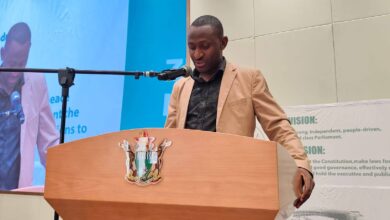
A position paper published in September 2026 by the Digital Content Creators Alliance, trading as Community Podium, with support from the Digital Democracy Initiative, calls on the City of Bulawayo, transport authorities and operators to adopt a coordinated approach to accessible transport.
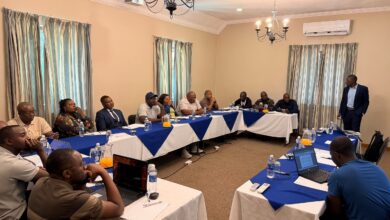
The paper draws on an August 2026 engagement with persons with diverse disabilities, personal care assistants and parents of children with disabilities, followed by observations at public transport access points in the city.
Its central message is that accessibility extends beyond boarding a vehicle. Broken pavements, unsafe crossings, inaccessible loading points and inadequate travel information can prevent people from completing even the first part of a journey.
“Accessibility must therefore be treated as a core requirement of urban planning and public service delivery, rather than as an optional welfare intervention,” the paper states.
Dependence on others raises dignity and safety concerns
Participants reported that commuter omnibuses generally lack ramps, lifts, designated wheelchair spaces and safe boarding arrangements. As a result, some passengers must depend on drivers, conductors, fellow passengers or strangers to lift or carry them into vehicles.
The paper warns that this dependence compromises privacy, dignity and bodily autonomy, while making travel impossible when assistance is unavailable.
It also identifies particular safety concerns for women and girls with disabilities. Being lifted or physically handled without consent or appropriate support can expose them to unwanted touching, verbal abuse, sexual harassment and other forms of gender-based violence.
The report calls for disability-inclusive safety protocols developed with women with disabilities, alongside confidential and accessible reporting channels for harassment, abuse and unsafe treatment.
Extra charges deepen exclusion
The cost of travel emerged as another barrier.
Participants said people who need personal assistants or caregivers face the financial burden of paying an additional fare because the transport system does not support independent travel.
They also reported extra charges, refusal or difficulties when travelling with wheelchairs and other assistive devices.
The paper recommends free carriage of essential assistive devices and a policy allowing an accompanying personal assistant or caregiver to travel without additional cost where that support is essential for safe travel.
Discrimination compounds these challenges. Participants described prejudice by some transport workers and passengers, including against persons with albinism.
Calls for infrastructure repairs and accessible vehicles
Observations at transport access points highlighted uneven and obstructed pavements, inadequate ramps and curb cuts, unsafe crossings, poor signage and loading areas that do not accommodate wheelchair users or people with reduced mobility.
Photographs accompanying the paper document damaged road surfaces, makeshift crossings over drains, deteriorating shelters and barriers to toilet access.
The paper urges the City of Bulawayo to conduct a comprehensive accessibility audit with persons with disabilities leading or meaningfully participating in the process.
It also calls for repairs and upgrades guided by universal-design principles, including accessible pavements, tactile paving, safer crossings, clear signage, seating, shelter and lighting.
Among its funding proposals is a recommendation that the council consider dedicating 5% of devolution funds to disability-specific transport and accessibility projects. The proposal would require transparent management and monitoring involving persons with disabilities.
Transport authorities and operators are urged to progressively introduce accessible vehicles, establish minimum service standards and train drivers and conductors in respectful communication, consent, safe assistance and gender-based violence prevention.
Accountability and participation
To move beyond isolated improvements, the paper recommends a time-bound Accessible Transport and Mobility Action Plan with clear responsibilities, allocated resources and public reporting.
Accessible complaints channels would allow residents to report discrimination, overcharging, harassment and infrastructure barriers, while monitoring would track corrective action and outstanding problems.
The paper argues that meaningful participation by persons with disabilities must underpin every stage of reform, from planning and budgeting to implementation and evaluation.
“Bulawayo needs a coordinated, end-to-end approach that makes pavements, crossings, loading points, vehicles, information, safety systems, and customer service accessible to all,” it states.