Youth MP challenges Government: SONA numbers don’t reflect lives of ordinary Zimbabweans

By Staff Writer, Parliamentary Watch
HARARE — A young Member of Parliament used the National Assembly’s sitting on Thursday, 8 October 2026, to challenge what he described as a disconnect between the macro-economic statistics celebrated in President Emmerson Mnangagwa’s State of the Nation Address and the day-to-day struggles of ordinary Zimbabweans, particularly young people who remain locked out of the formal economy.
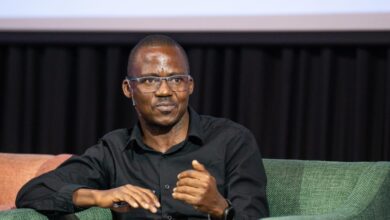
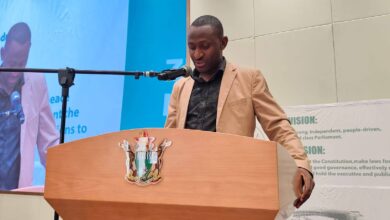
Hon. Takudzwa Ngadziore, who represents the youth quota in Parliament, delivered one of the sharpest critiques of the SONA delivered on 29 September 2026 during the continued debate at the National Assembly.
He told Parliament that headline figures such as single-digit inflation and USD10.7 billion in foreign currency inflows did not, by themselves, confirm that citizens were better off.
“A 2.8% year-on-year inflation rate is not it can be called, of course, a stabilisation achievement but it can never be a development outcome,” he told the House.
“It tells us the price level is steady but does not tell us about the real incomes. It does not tell us whether a young person at the University of Zimbabwe can afford.”
He cited a specific figure to anchor his argument: the total consumption poverty line for June 2026 stood at ZiG1,345.21 per person per month, yet the SONA, he said, contained no analysis of how many Zimbabweans actually earned above that threshold.
“When petrol reaches USD1.95 per litre, when commuting costs rise 50%, it is the ordinary people who bear the burden and it is this that SONA should address,” he said.
He also criticised what he called “distribution blind spots” in the SONA debate, questioning who actually benefits from the celebrated 27.9% agricultural growth.
“The Constitution mandates that 5% of national revenues flow to provincial and local councils. Treasury itself admits allocations reached only 4.83%, with delays blamed on fiscal constraints and competing priorities,” he told the House.
On the Youth Bill legislation that would give substance to Section 20 of the Constitution, which provides for youth rights and opportunities, he noted that the President’s address was silent on the matter, despite it having been mentioned in the 2025 SONA.
“The Youth Bill is a legal framework that gives content and substance to Section 20 of our Zimbabwean Constitution,” he said.
“This is a Bill that has been promised for decades. This is why it is an issue right now.”
He called on Parliament to ring-fence agricultural growth benefits for smallholder farmers and youth, to fast-track micro, small and medium enterprise formalisation, to create collateral-free loan facilities for young entrepreneurs, and to refurbish and decentralise Vocational Training Centres.
He also highlighted that the Youth Empower Bank had reached only 398 young people out of a population of millions a figure he said underscored the inadequacy of existing youth empowerment mechanisms.
His contribution was interrupted by a point of order from Government Chief Whip Hon. Togarepi, who argued that the youth quota MPs themselves bore responsibility for pushing youth-related legislation.
“These young people are failing to champion the youth,” Hon. Togarepi said. “Were you pushing for that Bill to be passed? You are quiet; you want to dramatise. We want serious legislators from the youth.”
Zimbabwe’s 10th Parliament includes a youth quota intended to ensure the voice of young people is represented in the legislature. Youth unemployment and underemployment are among the most acute socio-economic challenges facing the country.
Community Podium is the recipient of the 2025 Outstanding NGO Reporting Award. This reflects our dedication to amplifying community voices and advancing public-interest journalism.