MPs demand Agro-ecological tailoring as drought risks threaten regions 4 and 5
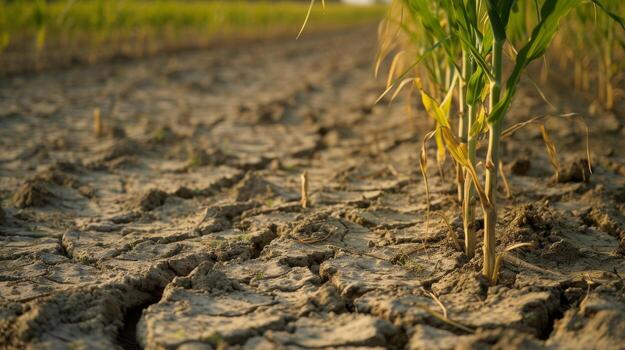
Image Source: Vecteezy
Parliamentary Watch
HARARE — Members of Parliament have urged the Government to abandon blanket national drought interventions and channel capital expenditure directly into the country’s driest agro-ecological regions ahead of anticipated El Niño weather disruptions.
Debating the 2026 Mid-Term Budget and Economic Review and the 2027 Budget Strategy Paper in the National Assembly, legislators argued that Natural Regions 4 and 5 bear the brunt of severe moisture deficits and require deliberate, disproportionate public investment in water harvesting, borehole drilling, and irrigation infrastructure.
Leading the call, Hon. Kaitano challenged Treasury to overhaul its resource allocation matrix to reflect the distinct climate vulnerabilities across Zimbabwe’s five ecological zones.
“My understanding shows me that Zimbabwe has got five regions and the impact of this El Niño in Zimbabwe is going to affect these five regions differently,” Hon. Kaitano told the House.
“Regions 4 and 5, Madam Speaker, are generally going to be hit harder than other regions. I am urging the Minister of Finance, Economic Development and Investment Promotion to closely look at those districts in Regions 4 and 5.”
Hon. Kaitano stated that Treasury must prioritise heavy infrastructural backing for marginal areas over higher-rainfall zones.
“In terms of investment into El Niño proofing, there has to be huge investments in these districts than those that are, for example, in Regions 2 and 3. If boreholes are going to be drilled, I would want to urge the Treasury to give more boreholes… If it is about building more dams, Madam Speaker, it must be tailor-made, especially to those districts that are heavily hit by not just this El Niño forecasted to be coming, but going forward because these districts have always struggled with harvesting water,” he said.
In response, Finance, Economic Development and Investment Promotion Minister Prof. Mthuli Ncube conceded to the legislators’ demands, stating that the government’s six-pillar drought-proofing strategy would prioritize the most vulnerable districts through targeted farming inputs, irrigation rehabilitation, and insurance mechanisms.
“He made a very important observation that we should do further agro-ecological tailoring of the response programme. So, Regions 4 and 5, for example, should be more focused there, whether it is with the Pfumvudza/Intwasa Programme with more irrigation and drilling; we should do more in the affected areas, Regions 4 and 5. I agree with him, that is exactly how this works,” Prof. Ncube said.
Prof. Ncube revealed that sovereign drought insurance facilities would be activated to disburse cash transfers across approximately 22 of the country’s hardest-hit rural districts.
“I can assure you that when it comes to insurance, you will find that we tend to pay the sovereign insurance in terms of cash transfers in Regions 4 and 5, in the main, the 22 or so districts in those kinds of areas,” the Minister added.
Zimbabwe is demarcated into five agro-ecological regions based on rainfall volume, altitude, and temperature.
Region 4 receives erratic annual rainfall between 450mm and 650mm, making it prone to severe mid-season dry spells and suited primarily for drought-tolerant traditional grains and semi-extensive livestock rearing.
Region 5, which covers low-altitude belts such as the southern Lowveld and the Zambezi Valley, records less than 450mm of rainfall annually, rendering rainfed maize farming largely unviable and leaving communal herds dependent on fragile grazing lands and seasonal watering points.
Extensive sections of Matabeleland North and Matabeleland South fall within Regions 4 and 5, where recurring droughts frequently exhaust communal pastures, deplete shallow groundwater sources, and compromise household food security.
Community Podium is the recipient of the 2025 Outstanding NGO Reporting Award. This reflects our dedication to amplifying community voices and advancing public-interest journalism.