Mazila family drives rural industrialisation
By Jonah B Moyo
The Mazila family in Umzingwane District is driving rural industrialisation through an integrated agriculture enterprise, comprising cattle breeding, goat breeding and exotic chicken breeding, while creating jobs for locals in the process.
Based in South Africa, the family acquired a piece of land back home where they could tap into the agricultural sector through exploring lines of production which have not been fully explored.
Mazila Holdings Project Manager, Mrs. Nontokozo Mabhena, revealed that the company began its livestock breeding venture in 2023 with 13 Brahmans. Today, their herd has grown to over 100 Brahmans, housed at a rented farm in Umzingwane District.
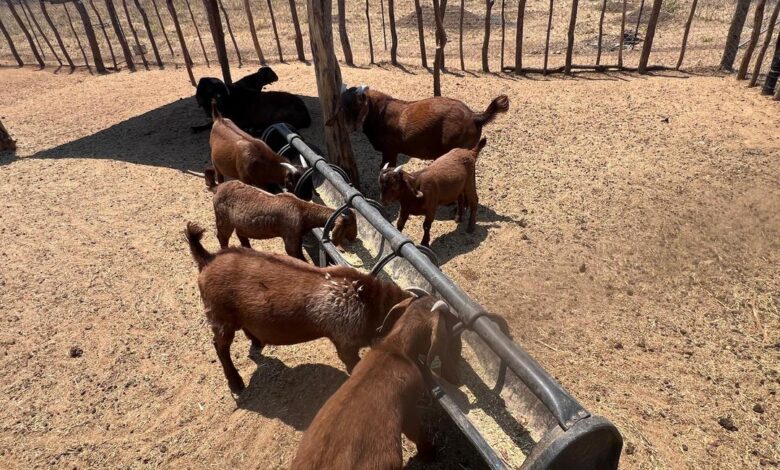
In February last year, they began a goat breeding project with 20 goats. The herd has since grown to 46 Kalahari and 20 Matabele goats, along with several lambs and regular goats. Building on this success, they expanded into chicken breeding in May this year, focusing on exotic breeds. They currently have two breeds and are preparing to introduce a third, with eggs already in the incubation stage.
Nontokozo Mabhena, Project Manager at Mazila Holdings, credited her brother Mandla Ncube, a South Africa-based entrepreneur, with conceptualizing the project. Under her family’s oversight, the venture has created employment opportunities for 11 local individuals.
“We have embarked on a number of agricultural projects such as goat breeding, livestock breeding and chicken breeding in a bid to contribute towards developing our community and country. We have the Red Kalahari goats which we are crossing with the Matabele in order to have pure breeds.
“For our livestock we have the red and white Brahmans. We specialise in production of exotic chickens such as the Cemani and Brahma chickens. We have noticed that there is a huge gap when it comes to production of exotic chickens and we want to increase their availability so that fellow farmers can also have access to them,” she said.
Mabhena explained that their goats are housed in separate pens to facilitate controlled breeding, ensuring a high conception rate through carefully managed mating and breeding processes. To nourish their livestock, they utilize locally sourced feed, combining edible tree leaves with fodder crops in precise proportions to create a nutrient-rich diet.
Mrs Mabhena said it their desire to be able to produce and sell over 100 goats in a year. She said their target is to ensure that the project grows at a significant pace.
Mrs Mabhena said it is important for diasporans to invest in their communities as they have a role to play developing the economy and nation.
“We got this place in 2019 and we vowed that we have to make the most of it and become as productive as we can. We are working on ensuring that we record significant growth and expansion of the project on a timely basis. We don’t want to remain where we are and we want our operations to have a significant impact in the agricultural sector.
“The more we grow our business the more we will be able to employ more people and we will also be able to help other farmers. We hope that as we increase or goat herd and number of chickens and breed varieties we will be able to supply the communities so they can improve their breeds as well,” she said.
Mr Mengezi Dube (20) who is employed by Mazila Holdings said the project has helped him and other youths to secure jobs. He said this is the kind of intervention which is needed to protect youths from engaging in harmful activities such as drug and substance abuse.
Another worker Mr Wilson Sibanda (21) said he has learnt new farming techniques and practices which are relevant to the prevailing climatic conditions. He said this information should also cascade to communal farmers.
Matabeleland South provincial Agriculture Advisory and Rural Development Services (AARDS) Director Mrs Shupikai Sibanda said the Mazila Holdings project is in line with Rural Development 8.0.
“This project we are seeing here is in response to a call by His Excellency President Mnangagwa on diasporans to invest back home. Such projects are crucial to the rural industrialisation drive as we see that employment has been created.
“We also see a variety of agricultural activities taking place here and also processing which is crucial if we want to develop our communities through agriculture. This project will also benefit and inspire upcoming farmers as well,” she said.