Conditions point to a disputed election
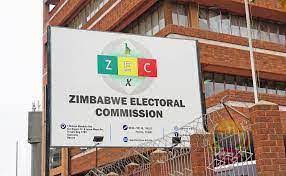
Conditions point to a disputed election outcome
Grace Moyo
Zimbabweans go to the polls within eight days amidst heightening tensions and an electoral environment that looks ominous as everything points to yet another disputed election.
When President Emmerson Mnangagwa wrested power from long time ruler, Robert Mugabe, one of his selling points was that the southern African country with a history of violent and allegedly rigged elections was finally going to hold free and fair elections.
“We will ensure that Zimbabwe delivers free, credible, fair and indisputable elections to ensure Zimbabwe engages the world as a qualified democratic state,” Mnangagwa was quoted as saying by the state-run Herald on the eve of the 2018 election. Before then he had said the same at the World Economic Forum in Davos a few months earlier.
There was indeed a modicum of freeness in the 2018 election, which was largely devoid of the violence that had marred previous elections. However, the perceived intransigence of the Zimbabwe Electoral Commission (ZEC) in issues to do with the voters roll and “stuffing of ballots” as alleged by the opposition blighted the election that was relatively peaceful.
Opposition supporters demonstrated against the electoral body’s delay and six people were gunned down in Harare. By the time results were announced with Mnangagwa duly elected president, the nation was in shock at the disproportionate use of force by the state. It was sadly a replay of what Zimbabwean elections have been known for: violence, alleged vote rigging and court battles that culminate in victory for the incumbent.
Fast forward to 2023, the same issues if not worse are still there. ZEC has still not released the voters roll to political parties with just a little over a week to go. The opposition Citizen Coalition for Change approached the High Court praying it to compel ZEC to release the voters roll but the court said the matter is not urgent, even with only nine days before the election.
“Whereupon after reading documents filed of record, it is ordered that the matter is not urgent said Never Katiyo, the judge.
“The CCC approached the High Court for an order mandating ZEC to provide it with the final voters roll and list of polling stations. The court has said the matter is not urgent. This is pretty much like saying, die first and complain later. We disagree and are proceeding to take the necessary action,” said Citizen Coalition for Change lawyer Thabani Mpofu.
Most of the attempts by the opposition to seek recourse from the courts have hit a brick wall, giving rise to allegations that the courts together with other institutions including ZEC have been “captured” to do the bidding for the ruling party.
A recent study on Zimbabwe’s electoral politics, processes and institutions titled ‘Electoral Politics in Zimbabwe, Volume I: The 2023 Election and Beyond,’ found that most voters surveyed do not trust ZEC. The study which was edited by local academics Esther Mavengano and Sophia Chirongoma said, “The most important factor in ensuring credible elections in Zimbabwe is by promoting a transparent Independent Commission. There is no way elections can be free and fair, while the commission is accused of being aligned with the ruling party, State President and Constitutional Court.”
Electoral violence has reared its ugly head once again with cases of violence increasing as Zimbabwe gets closer to polling day. At least one opposition supporter has been killed. Tinashe Chitsunge was reportedly stoned by ruling party members in Glen View, Harare in the lead up to his death. The 10 suspects that were arrested have been swiftly granted bail, much to the consternation of the opposition.
“In Zimbabwe the law only works against the opposition. Ruling party thugs can burn houses and even kill without consequences, yet we have Jacob Ngarivhume and Job Sikhala languishing in prison based on flimsy charges. This is symptomatic of weak and captured institutions that are supposed to be independent. Without consequences to such heinous crimes, we are headed for more violence and another bloody election.
This election is a sham. We saw a Zanu PF candidate intimidating voters in Gokwe a few days ago and ZEC have not taken any action because that candidate belongs to the ruling party,” said Oswald Sibanda, a political analyst.
At every opportunity, Mnangagwa has been preaching peace during his campaign rallies but his call seems to be falling on deaf ears. However, Sibanda feels there is no real political will to end violence.
“To his credit, the president is saying all the right things about peace but I do not think there is enough political will to stamp out violence on the part of the system which by the way has power to send out a clear example to would-be offenders by decisively punishing perpetrators but this is not happening. Unless and until there are strong measures taken against violence, calls for peace remain lip service,” he said.
In their monthly report, Human Rights watchdog, Zimbabwe Peace Project (ZPP) say ruling party aligned Forever Associates of Zimbabwe (FAZ) have overtaken the police in violating human rights in Zimbabwe.
“Looking at the figures of perpetrators, it seems FAZ has overtaken the Zimbabwe Republic Police to become the second only to Zanu PF,’ said the ZPP which also revealed that FAZ plans to stop opposition members from voting on polling day.
“FAZ cell chairpersons are planning to lead their cells and closely monitor their members when voting…all opposition members should be clearly known so that they do not vote on polling day,” said ZPP.
“In some communities, people have been told that if they are members of the CCC, they should relocate until after the elections as they might be caught in a crossfire.”
The report also expressed concern at the hate speech that has been on the rise. One example cited were Mangaliso Ndlovu’s utterances at a rally in Nyele village, Bulilima district. The Zanu PF Matabeleland South Chairperson likened CCC supporters to cockroaches.
“Beyond that, the sentiment that he used during the rally is the same hate language that was used by Robert Mugabe during the Gukurahundi genocide.”
“ZPP believes that hate language incites violence, therefore politicians should desist from use of hate language to promote peace prior, during and after elections,” said ZPP.
Zimbabwe has invited foreign observers from the European Union, United States of America, Russia, the United Kingdom, among other nations as well as continental and regional bodies.