Minister calls for increased awareness on wetlands
Mabel Khumalo
Minister of Environment, Climate, Tourism and Hospitality Industry, Nqobizitha Ndlovu has urged environmental organisations to step up awareness in order to reverse the rapid loss of wetlands and encourage actions to conserve and restore them.
According to the minister, nearly 90% of the world’s wetlands have been degraded since the 1700s.
‘We are losing wetlands three times faster than forests. Yet wetlands are critically important ecosystems that contribute to biodiversity, climate mitigation, adaptation, fresh water availability, world economics and more,” he said.
Hon. Ndlovu said this in a press statement released in commemoration of World Wetlands Day which is celebrated globally to mark the signing of the Treaty on the Conservation of Wetlands in 1971, popularly known as the Ramsar Convention. Its aim was to raise public awareness on conservation, proper utilisation and management of wetlands and their resources. The convention was also uniquely positioned to reverse the loss of global wetlands and to preserve those that are still in their original state.
This year’s programme is running under the theme: It’s time for wetland restoration, a theme that amplifies the urgent need for restoration of wetlands.
“The theme resonates well with and contributes towards efforts to heal the planet as championed by the United Nations Decade on Ecosystem Restoration running between 2021 and 2030,” said Minister Ndlovu.
Zimbabwe ratified the Ramsar convention on 11 February 2012 and has since designated seven sites as wetlands of international importance, namely the Victoria Falls, Driefontein, Grasslands, Mana Pools, Lake Chivero, Monavale Vlei, Chinhoyi Caves, and Cleverland Dam.
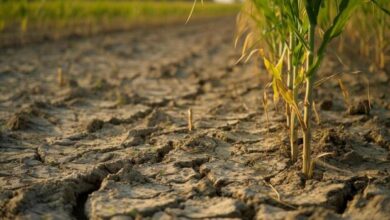
“Of these available wetlands, the flood plains, pans, dambos, vleis and artificial impoundments constitute 35% of the total area of the country which is equivalent to almost 14 million hectares. However these resources are being threatened by human activities like overgrazing, cultivation, infrastructural development coupled with climate change. Currently 55,65% of wetlands are moderately degraded and 26,72% are severely degraded,” said Ndlovu.
Since 2021 a total of 103 wetlands with a total area of three hundred and fifty thousand hectares were put under sustainable management across the country and more such projects are yet to be implemented.
“In September 2021 the government, through treasury, disbursed a ZW30 million grant which was fully utilised for the rehabilitation of three wetland projects namely Marongere in Masvingo District, Nyamhara and Ndabambi in Gweru District.
In addition, the Environmental Management Agency, using its own core resources, supported some components of the three initial projects as well as new projects namely Mpompini, Mazvide, and Guga Wetlands. The components include the protection of sensitive wetland portions, water harvesting, and the establishment of consolidated gardens among others,” said Hon. Ndlovu.
In conclusion, Hon. Ndlovu said it is the responsibility of all Zimbabwean citizens to protect our wetlands for the benefit of current and future generations.