Communities must partake in wildlife revenue: Residents Associations
Providence Moyo
Residents associations from across Matabeleland are calling for a revenue sharing system that accommodate communities. Currently, the government through its agency, ZimParks is the sole authority entitled to wildlife revenue in Zimbabwe.
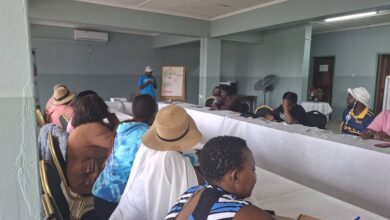
The call came up during a recent meeting of Matabeleland Residents Associations hosted by Bulawayo Progressive Residents Association (BPRA) at Momentum Lodge in Richmond, Bulawayo.
Several Matabeleland residents associations in attendance highlighted the need for communities to also benefit from local parks revenues as they noted that communities are the worst affected by wild animals hence the need to benefit from any revenues generated in their areas.
Speaking during the event, Director for Greater Hwange Residents Trust, Fidelis Chima said the revenue must be used to develop the host communities.
“We are living side by side with these animals and the damage they do is experienced by the communities. It is a no brainer that if these animals are generating money for authorities, part of the proceeds must be ploughed back to communities for development purposes,” said Chima.
In addition, the Residents Associations were unanimous in their appeal for the Wildlife Management Act to be ammended as they emphasised on the need for compensation of victims of human wildlife conflict. The existing law only protects animals and has no provision for compensation in the event that humans suffer loss as a result of animal attacks.
The associations bemoaned the impact of COVID-19 as it disrupted their normal operations thereby hindering their work with residents. A series of pandemic induced lockdowns forced the associations to go virtual, effectively eliminating the much-needed personal touch with residents that physical meetings allow.
In his submission, Mr Thembelani Dube of BPRA decried the rampant nocturnal sand poaching in the city, especially in Ward 17.
“The problem is that these poachers use the cover of night which makes it difficult for community members to stop them. Last month, a community member’s house was destroyed by these poachers who have become a menace in Ward 17 and painfully this affects people who do not benefit from the sand,” he said.
Whilst delivering his presentation on the role of residents associations , Mr Tobias Guzura, a senior Lecturer in the Department of Development Studies at Zimbabwe Open University (ZOU) encouraged the residents associations to monitor trends in their respective communities and allign their work accordingly.
” Residents Associations must learn to monitor trends in their communities so that when abnormalities happen, they are able to call for proper structures to be put in place so that the anomalies are corrected. For example, Gwanda Residents Association will know the season for mopane worms (amacimbi) harvesting. When the season is on and mopane worms are nowhere to be seen, it means something wrong has taken place, hence the need to monitor outsiders in particular who may be coming in to harvest mopane worms and make sure that communities benefit from their own natural resources,” he said.
Mr Guzura further urged Residents Associations to form Natural resource management teams that will look directly into issues of natural resources within their communities.